Chicken and Artichoke Recipe: A Cozy Classic for Every Cook
This chicken and artichoke recipe is the result of several rounds of tinkering in my kitchen, inspired by the meal my best friend brought over one chilly evening after a long workweek. I remember that night: we sat cross-legged on the floor, forks swooping straight from the serving bowl. I had to recreate it, dialing in the crispness of the chicken and the way the artichoke hearts almost melted into the sauce.
Testing it four times, I muted bitter notes from jarred artichokes with a brief rinse, balanced tang with a splash of wine, and insisted the chicken always emerge golden and juicy. The version here is truly weeknight doable but impressive enough for company—restaurant vibes, no stress. My hope is that it brings you the same comfort and delight.
Why You’ll Love This Chicken and Artichoke Recipe
- Big Flavor, Little Fuss: The tangy brininess of artichoke hearts mingles with tender, juicy chicken for a meal that feels complex but needs only a handful of ingredients. The artichokes add an earthy, lemony brightness that cuts through the richness of the chicken, making balance a centerpiece of every bite. Think of this as the kind of dish that wows guests with its bold flavor profile, yet it’s crafted from everyday pantry staples and doesn’t require specialty store runs. One skillet, one oven dish—minimal cleanup, maximum reward.
- Tested for Texture: After four rounds in my kitchen, the chicken always finishes golden brown and moist—from stovetop sear to gentle oven finish, you get crispy outside and succulent inside. This method prevents the disappointment of rubbery, overcooked meat or soggy skins. By letting the chicken rest before serving, the juices redistribute for bite after bite of perfectly textured, restaurant-quality chicken.
- Packed with Comfort: Each bite delivers creamy, lemony sauce layered with umami, perfect for spooning over buttered noodles, rice, or a thick slice of sourdough. The sauce clings to whatever you pair it with, making it an especially warming winter meal, but it also feels light enough for spring evenings. The comforting aroma as it cooks—garlic mingling with white wine, lemon, and savory chicken—really fills the kitchen with a sense of home. Whether you curl up beside the stove while it bakes or set the table with candles, it’s a hug in a bowl.
- Flexible Ingredients: This dish is friendly to pantry swaps and dietary tweaks—see the notes to make it gluten free, dairy free, or vegetarian. You can stretch the recipe with extra veggies like spinach or peas, or take shortcuts with rotisserie chicken for leftovers. Out of fresh lemons? A little bottled juice works in a pinch, and almost any broth (even mushroom) can substitute. This recipe adapts beautifully to your fridge and routine.
- Made for Sharing: It scales up beautifully for a dinner party but is easy enough for a cozy night in (I’ve cooked half a batch for two, and a double batch for family). It’s the perfect way to cook for friends or family without stress: just multiply the ingredients, and the steps stay simple. Each guest gets a crispy, golden chicken piece and a hearty helping of sauce—the dish actually improves after resting, so it’s perfect for parties where timing is loose.
Ingredient List with Notes and Swaps
- Chicken Thighs (skin-on, bone-in) – 2 lb (900g) or about 6 pieces. Juicy, richer flavor, and stays moist when seared and simmered. Swap: Boneless thighs or breasts work, but watch them closely to avoid dryness. Skin-on imparts extra flavor and retains more moisture, giving the sauce added depth as it cooks. If using bone-in breasts, increase oven time slightly; for boneless/skinless, decrease by a few minutes. For a lighter twist, try chicken tenders—just note that the cook time shortens drastically and texture will be less rich.
- Artichoke Hearts – 1 can or jar (14 oz/400g), drained and rinsed. Brings tang and gentle bitterness. Fresh, frozen, or marinated all work; just adjust seasoning to taste. If using fresh, prep by simmering trimmed hearts in acidulated water until tender. Frozen ones should be thawed and squeezed dry for best texture. For marinated, rinse briefly to tone down strong vinegariness.
- Yellow Onion – 1 medium (about 1 cup/120g), finely chopped. Adds sweetness and base flavor. Shallot or red onion is great for a milder vibe. Red onion will give a slightly more colorful, subtle sweetness, while shallots introduce delicate sharpness. Don’t skip this aromatic–it’s crucial for the flavor backbone of the sauce.
- Garlic – 4 cloves (about 12g), minced. Aromatic punch—don’t skip it. If garlic cloves are large, use 3; if small, toss in 5. For a deeper flavor, try roasting a bulb and smearing some paste into the sauce at the end for gentle, sweet undertones.
- Dry White Wine – 1/2 cup (120 ml). Lends acidity and depth to the sauce. Sub: More broth or a splash of lemon juice for non-alcoholic version. Pinot Grigio, Sauvignon Blanc, or even a Chardonnay (not oaky) work well. The wine helps deglaze the pan and extract browned flavors left behind from searing the chicken.
- Chicken Broth – 1 cup (240 ml). For the saucy, savory base. Veggie broth works too. Homemade broths will add even more complexity, but store-bought is absolutely fine. Taste and adjust salt levels if your broth is particularly salty or low sodium.
- Lemon – Zest and juice of 1. Brightens and lifts the whole dish. If you love extra acidity, add the zest of a second lemon; if you prefer mellow, try using Meyer lemons for subtle flavor. Bottled lemon juice works, but fresh gives more fragrant oils.
- Olive Oil – 2 tbsp (30 ml). For searing chicken and softening aromatics. If you like, try half grass-fed butter for searing for added browning and sweetness, or use avocado oil for a more neutral flavor and higher burn tolerance.
- Butter – 2 tbsp (30g). Enriches sauce and rounds flavors. Sub: Vegan butter or just olive oil for dairy free. Brown butter (cooked until golden) adds a nutty, deep note if you want to experiment.
- Fresh Parsley – For garnish and fresh herbal bite. Try dill or basil for something different. Chives or tarragon work for a subtle, slightly licorice finish; cilantro if you want bold, fresh punch.
- Salt and Pepper – To taste. Freshly ground black pepper is best for brightness. If using flaky sea salt, add it at the end for bursts of flavor.
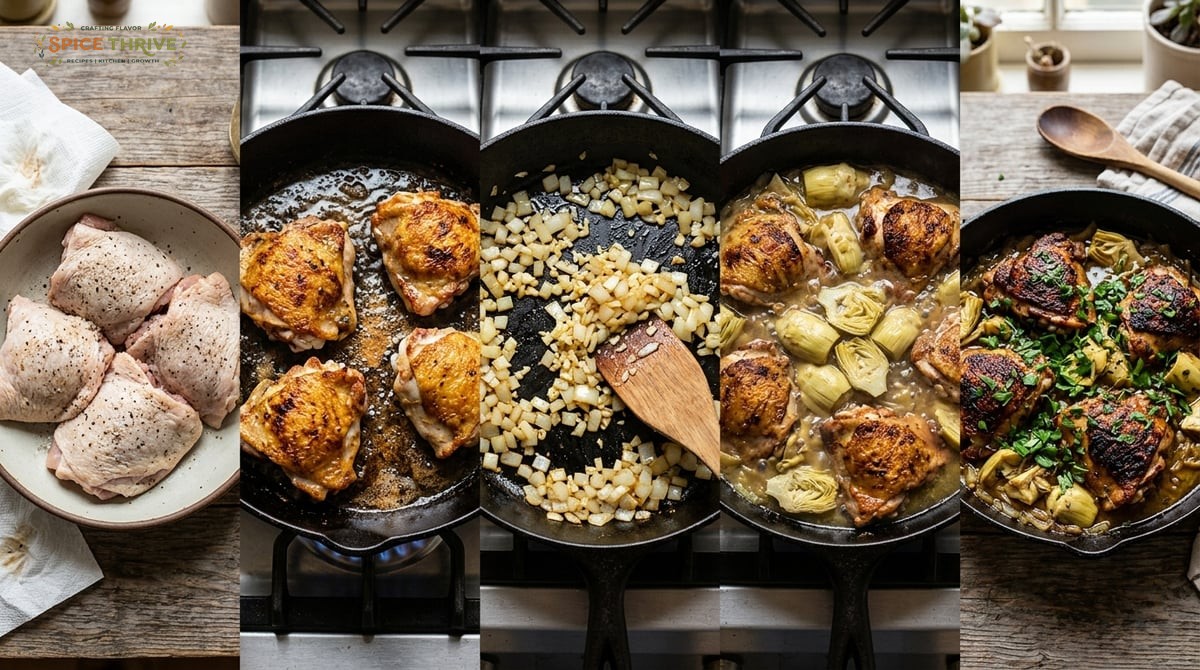
Step-by-Step Instructions with Visual Clues
- Prep the Chicken: Blot chicken thighs dry with paper towels. Season on both sides with salt and pepper. (This helps crisp the skin—if there’s extra moisture, the skin steams instead of searing.) Take the time to check crevices, especially under the skin, so every bit is seasoned.
- Sear the Chicken: In a large oven-safe skillet, heat olive oil over medium-high. Lay the chicken skin-side down. Sear undisturbed for 6-8 minutes, until the skin is deep golden and releases easily. Flip, sear 2 minutes more, then transfer to a plate (it won’t be fully cooked yet).
Pro tip: If you’re searing in batches, don’t crowd the pan, or the chicken will steam. Pour off a little fat if the pan gets greasy. - Sauté Aromatics: Reduce heat to medium. Add onion and a pinch of salt, scraping up browned bits. Cook 3-4 minutes until onion softens and turns translucent. Add garlic, sauté until fragrant (about 1 minute).
Visual clue: Onions should just start to turn golden at the edges, and garlic should not brown—stir frequently. - Deglaze: Pour in white wine, simmer 2 minutes (scrape the bottom until the wine is mostly reduced and the pan smells complex, not harsh).
The wine should bubble, lifting dark fond—watch for the liquid to go from sharp-smelling to mellow and slightly syrupy. - Simmer Sauce: Add broth, lemon zest, and drained artichokes. Nestle chicken back in, skin side up. Spoon some sauce over thighs.
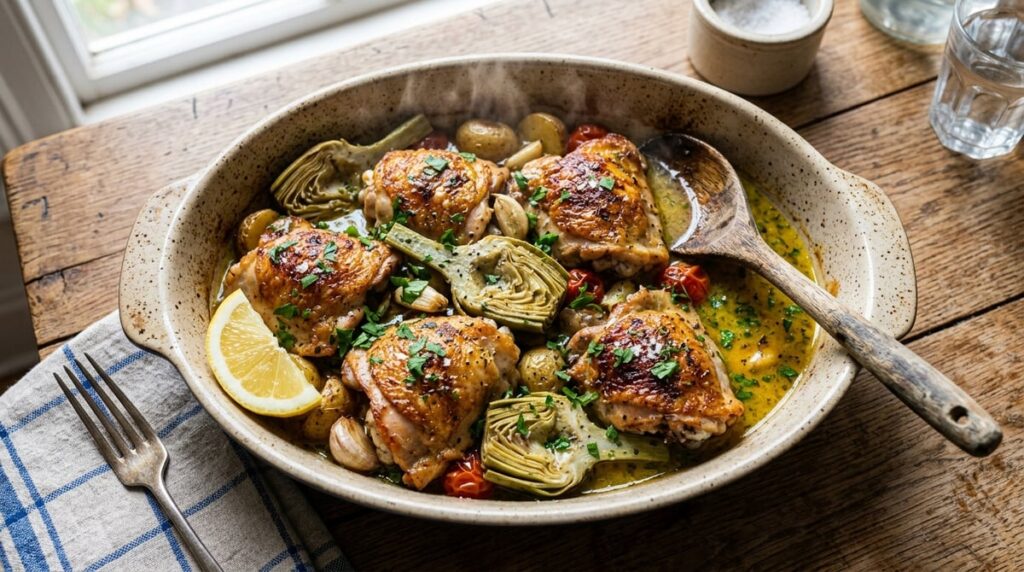
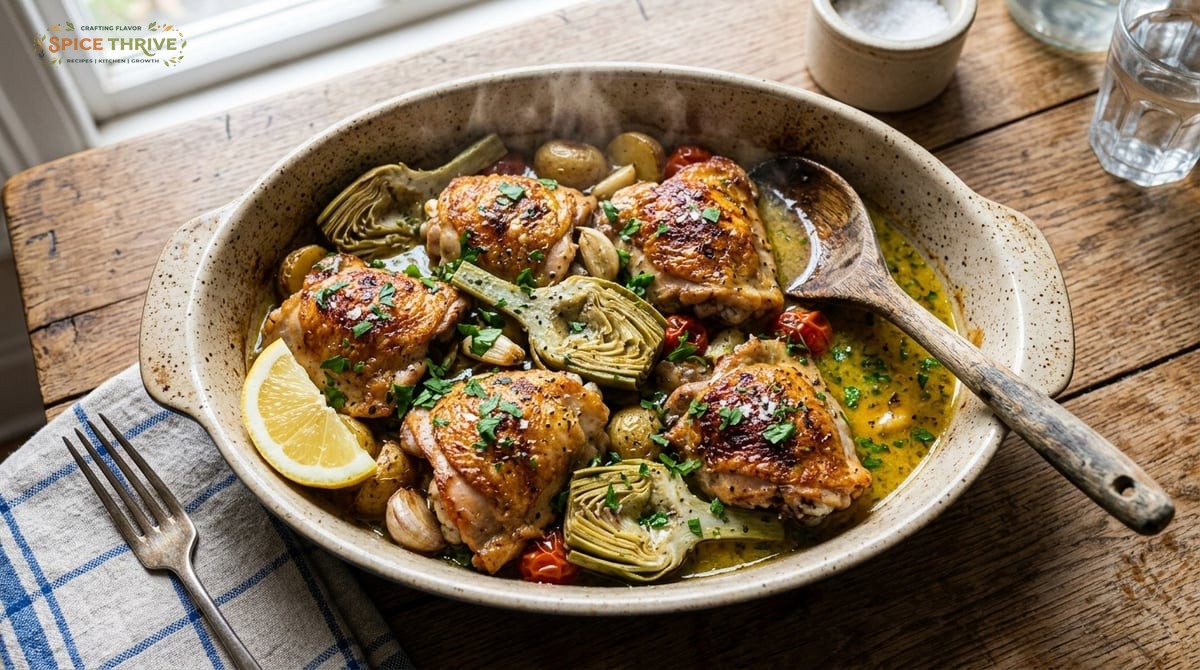
Look for bubbling around the edges—don’t submerge the skin, or it won’t stay crisp. If your artichoke hearts are whole, break them up a bit with a spoon before stirring in, so their flavor infuses evenly. - Oven Finish: Transfer skillet to a preheated 375°F (190°C) oven. Roast 15-20 min, until chicken is cooked through (internal temp 170-175°F/77-80°C, juices run clear).
The skin will take on a rich, golden color. Avoid overbaking, especially if you’ve swapped in boneless pieces; check at 13-15 min and go longer only if needed. - Final Touches: Return pan to stovetop. Remove chicken briefly. Whisk in butter and most of the lemon juice over low heat—sauce should be glossy and tangy, not greasy. Return chicken, spoon sauce, shower with chopped parsley.
Final cue: The sauce thickens slightly and looks silky, not oily. Taste before serving and adjust lemon or salt as needed. Garnishing with fresh parsley lifts the flavors and makes the final dish vibrant.
Taste and add salt, pepper, or a squeeze more lemon if you like. Serve hot with your favorite base.
For extra presentation: top with thin lemon slices baked on the chicken in the last five minutes, or add extra chopped herbs just before serving.
Pro Tips: What I Learned from Testing
- Getting the Sear Right: My first attempt, I rushed the chicken and ended up with soggy skin. The fix: let it brown fully and don’t nudge it until it releases easily from the pan. You’ll hear a satisfying sizzle when it’s frying correctly, and notice the skin shifting from pale to deep golden and crisp at the edges. Resting the seared chicken briefly before finishing in the oven ensures the juices stay locked in.
- Choosing Artichokes: Marinated artichoke hearts were a bit too sharp for my taste the first time. Rinsing them gently muted bitterness and balanced the flavor—especially if the brine is strong. If you prefer more pronounced acidity, keep a few marinated hearts aside and chop them for garnishing at the end; otherwise, rinse thoroughly and taste a piece for saltiness before adding.
- Transferring to the Oven: Oven time ensures juicy meat but keeps the skin crisp. If you only use stovetop, reduce the liquid and watch more closely to avoid overcooking. An ovenproof skillet is invaluable for this; otherwise, traditional skillets can transition the chicken and sauce to a baking dish for the oven portion. Check doneness by piercing the thickest part of the meat: juices should run clear, not pink.
- Don’t skimp on lemon: The lemon juice and zest cut through richness—you need both for a bright finish. Adding zest during simmering releases aromatic oils, while adding juice right before serving maintains the fresh pop. If you like a slightly sweeter dish, try Meyer lemon or add a pinch of sugar to balance.
- Sauce Texture: After pulling from the oven, let the sauce thicken slightly with the butter off the heat. No flour required—it thickens naturally. This relies on gentle reduction and the natural collagen from the chicken skin and bones. If you like your sauce even silkier, swirl in a tablespoon of heavy cream at the very end.
Variations and Dietary Swaps
- Gluten-Free: This recipe is naturally gluten-free as written. Double-check your broth to ensure it’s gluten-free. For serving, pair with gluten-free pasta, rice, or chickpea-based sides. Thick cut polenta cakes or a scoop of creamy mashed potatoes make excellent gluten-free bases as well.
- Dairy-Free: Swap butter for vegan butter or more olive oil. The sauce will be a bit lighter but still luscious. For added depth, consider finishing with a couple spoonfuls of full-fat coconut milk or a splash of oat cream, which instantly lends creaminess without dairy.
- Vegetarian/Vegan: Sub in two cans of rinsed chickpeas for chicken, use veggie broth, and add roasted mushrooms for umami. Sauté until heated through and serve right from the pan. Try a blend of portobello and cremini for the best texture. Spring peas or diced zucchini also bulk things up for a fresh vibe, while capers or sun-dried tomatoes bolster the savoriness.
- Low-Carb: Skip the bread sides and serve over cauliflower mash or greens. Sautéed Swiss chard, garlicky spinach, or a simple arugula salad add bulk without carbs and play well with the lemony rich sauce.
- Flavor Swaps: Add a handful of Kalamata olives for Mediterranean punch, a glug of cream for extra richness, or fresh dill for a springy twist. Try folding in baby spinach at the very end, so it wilts in the residual heat for added color and nutrients. Crumbled feta or shaved Parmesan work for a salty finish, especially if you want to serve family-style at the table.
Storage, Reheating, and Make Ahead Notes
- Storing: Cool leftovers fully, then refrigerate in an airtight container for up to 3 days. The sauce thickens even more overnight, and the flavor deepens. For optimal results, store chicken and sauce together so the flavors continue mingling—the artichokes get softer and more flavorful by day two.
- Reheating: Reheat gently in a skillet over medium-low, with a splash of broth to loosen the sauce if needed (keeps chicken from drying out). Microwave works in 30-second bursts, but the skin stays crispier on the stove. If reheating more than two pieces, cover loosely with foil in the oven at 325°F (160°C) for 15-20 min to preserve texture and avoid overcooking.
- Freezer Notes: This dish freezes well for up to one month. Cool completely, portion into airtight containers, and thaw overnight before reheating. For best results, freeze chicken and sauce together, and reheat in a covered skillet so the sauce rehydrates the meat as it thaws. Avoid freezing fresh herbs; add them after reheating for vibrant color and taste.
- Make Ahead: Sear the chicken and make the sauce a few hours ahead. Cool, refrigerate separately, then combine and finish in the oven just before serving. Since flavors meld and improve, it actually tastes better with a little time to rest. For entertaining, assemble everything in the pan and refrigerate overnight—just bring to room temperature before oven-finishing to ensure even cooking.
Ready to Try This Chicken and Artichoke Recipe?
If you cook this chicken and artichoke recipe, I’d love to hear how it turns out! Leave a comment or tag @SpiceThrive with your photos, tweaks, and favorite sides. Sharing from my home kitchen to yours is what makes this space feel like a real table.
For more restaurant-quality meals you can master at home, check my smoky honey soy chicken or golden-brown ricotta-stuffed shells—just click around the site. Happy cooking, and don’t forget your lemon wedge!
Chicken and Artichoke Recipe FAQ
Can I use chicken breasts instead of thighs?
Yes! Boneless or bone-in breasts cook a bit faster. Check for internal temperature (165°F/74°C) and avoid overcooking. They won’t be quite as juicy but will still work beautifully with the sauce. To prevent dryness, you could consider brining the breasts in lightly salted water for 30 minutes before cooking, or basting them with sauce half-way through baking.
What should I serve with chicken and artichoke?
This dish is lovely over buttered egg noodles, steamed rice, or even creamy mashed potatoes. For something lighter, serve with quinoa or a tangle of wilted greens. For a festive touch, pair with roasted asparagus or lemony green beans, or serve with polenta to soak up the citrusy sauce.
Do I need to use wine? Will it taste strong?
The alcohol evaporates during cooking, leaving just bright acidity and depth. If you skip wine, use extra broth and a squeeze more lemon. The wine won’t taste prominent—just complex. For a richer flavor substitute, try a splash of apple cider vinegar cut with water; the result is still tangy but a bit rounder.
How do I keep the chicken skin crispy?
Pat the skin really dry and let it sear undisturbed until golden and naturally released. In the oven, keep the skin mostly above the sauce, not submerged. As a bonus, run the skillet under a hot broiler just before serving for 1-2 minutes—this crisps the skin further while leaving the meat moist.
Can I make this in advance?
Yes! Sear and make the sauce ahead, then combine and bake just before eating. Flavors get even better, and the texture holds up well. If you’re prepping for a crowd, assemble everything up to a day early, refrigerate, and add fresh parsley and lemon right before serving.
Are artichokes from a can OK?
Definitely. Rinsed canned or jarred artichoke hearts (marinated or plain) both work. Fresh is delicious if you have the time. Just avoid soggy or broken hearts for best texture. When using marinated, taste and adjust salt as the brine can add unexpected sharpness.
This article was created with the help of AI. Images may also be AI-generated.