A Comforting Classic Made Easy: Vegan Gluten Free Shepherd’s Pie in the Crockpot
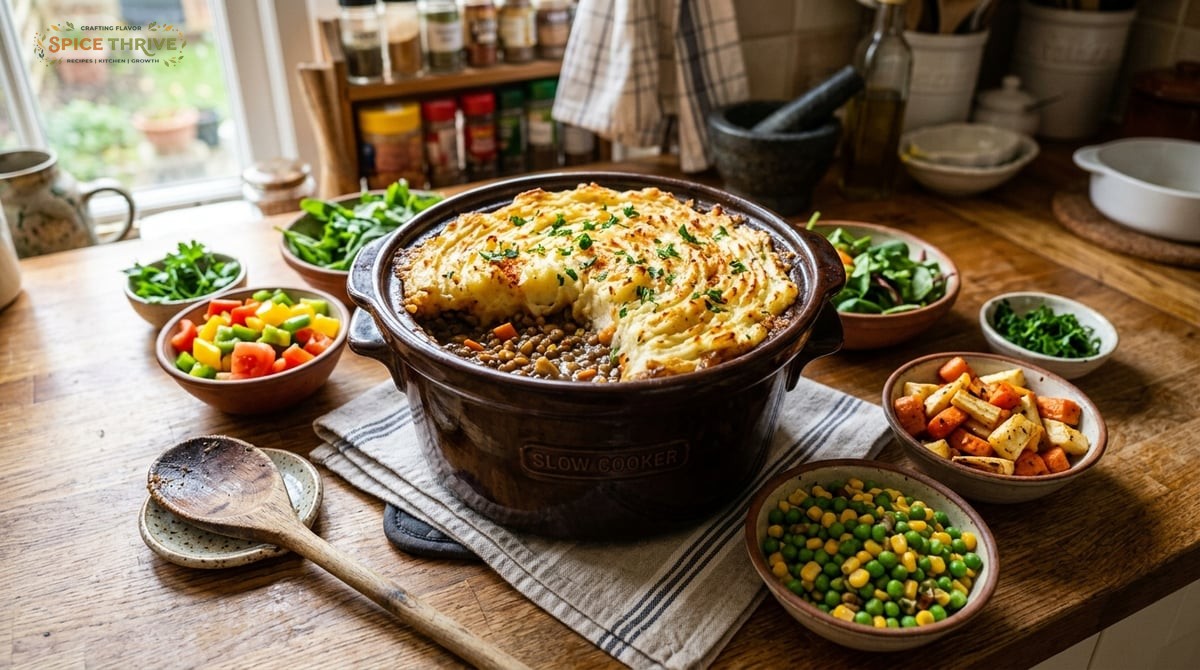
Shepherd’s pie is pure comfort food for me. I first learned to make it with my grandmother years ago (hers used plenty of lamb, of course), but as I started exploring vegetarian and vegan cooking, I was determined to reimagine this classic in a way that everyone at the table could enjoy. After tweaking ingredients and running four full tests (and lots of taste-testing with my family), I landed on a method that nails that warm, savory filling with creamy mashed potato topping—100% plant-based and gluten free, with all the golden brown goodness you crave. The best part? The crockpot does most of the work, so all you have to do is assemble and dig in.
Why You’ll Love This Crockpot Vegan Gluten Free Shepherd’s Pie
- Low effort, high reward: The slow cooker does almost everything, letting veggies caramelize gently and bringing out deep, savory flavors without hovering over the stove. When left to simmer all day, the flavor base of onion, garlic, thyme, and mushroom gets a depth that’s hard to achieve on the stovetop, even if you enjoy closely watching your pot. The gentle, moist heat of the crockpot not only means less fuss but also ensures your lentils and vegetables are never dry or overdone.
- Comfort food, made allergy-friendly: Skip the gluten, dairy, and animal products—this recipe makes classic shepherd’s pie fully accessible without missing out on taste or texture. For families with multiple allergies, this dish is a reliable safe bet, especially since many commercial shepherd’s pies contain hidden wheat in their sauces and instant potatoes.
- Hearty and filling: Lentils, mushrooms, and veggies make it protein-rich and deeply satisfying, so no one will even notice it’s meatless. Even omnivores at my table have gone back for seconds, thanks to the meaty texture lentils and mushrooms provide. The layer of golden mashed potatoes on top turns it into a true stick-to-your-ribs meal, the kind you want on a cold or busy night.
- Prep-ahead friendly: You can assemble parts in advance, or let it cook while you go about your day. Dinner practically makes itself. I often prep the filling veggies the night before so in the morning, it’s just a quick assembly before heading out.
- Tested and tweaked: This recipe was tested multiple times in real home conditions, and every technique is aimed at maximum flavor, great texture, and minimal fuss. Combining family feedback with my own notes, I iteratively made sure the filling wouldn’t get mushy, the potatoes would brown well, and each spoonful had the “scoopable” comfort of the original dish.
Ingredients & Substitutions (with Testing Notes)
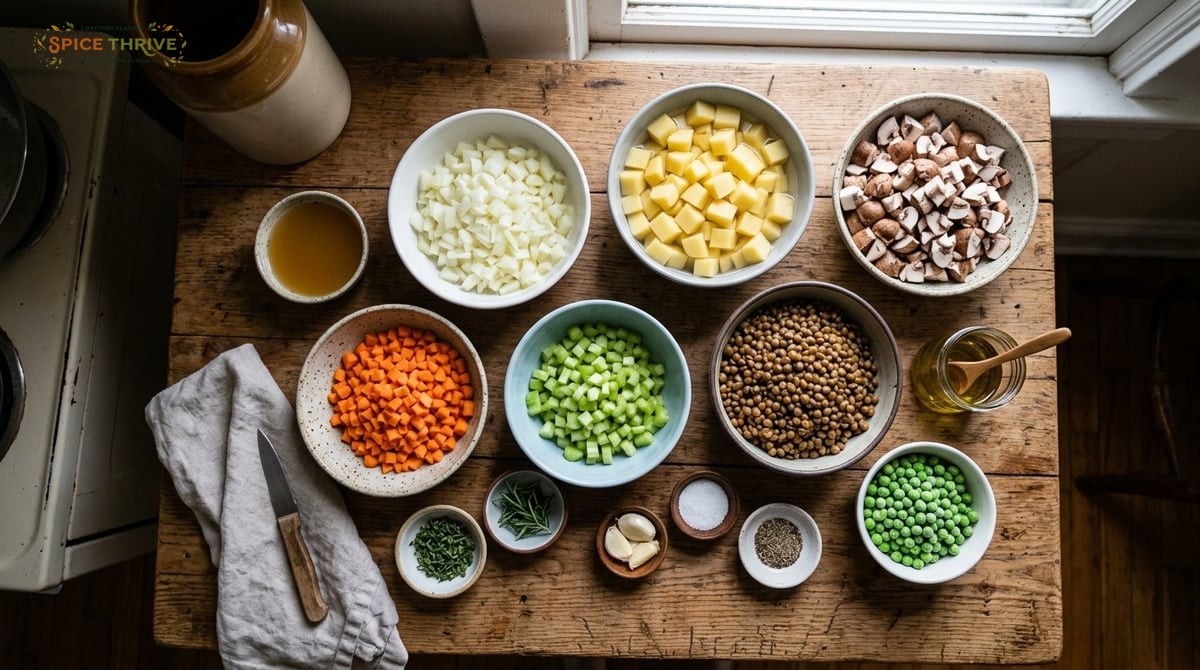
Each ingredient here earns its spot, bringing something special to the party. Here’s the full list plus ideas for swaps—just like I played with during testing.
- Brown lentils (1 cup / 190g dried): The hearty backbone. They hold their shape through slow cooking and bring rich, earthy flavor. Green lentils work too, though they stay firmer and give a slightly different mouthfeel. Red lentils tend to get mushy, so I avoid them for this recipe.
- Mushrooms (2 cups / 160g, chopped): For savoriness and an almost meaty bite. I use cremini, but white mushrooms work fine. During testing, shiitake mushrooms added another layer of umami, though they can be pricier. If you’re not a mushroom fan, use extra carrot or eggplant, but keep in mind you’ll lose some “meaty” depth.
- Carrots (1 cup / 130g, diced): Add color, sweetness, and subtle crunch. Parsnips are a good sub. Roasted diced sweet potato gives a deeper flavor and pop of color.
- Celery (1 cup / 100g, diced): For aromatic depth. Fennel bulb can substitute for another layer of brightness and mild sweetness, which I tried during testing and enjoyed.
- Onion (1 large / 180g, diced): Sweetens and flavors the base. Shallot works in a pinch. For even more complexity, use a combo of leeks and yellow onion; I tested this version for extra sweetness.
- Frozen peas (1 cup / 130g): Classic addition and final pop of green. Fresh or sub with green beans if preferred. I sometimes use edamame for extra protein if that’s what I have on hand.
- Garlic (4 cloves, minced): That sharp aromatic hit. Crushed garlic can be stirred in near the end for fresher flavor, depending on your garlic preference.
- Tomato paste (2 tablespoons / 30g): Deepens color and flavor. I’ve tried doubling the amount for a more robust tomato backbone, but 2 tbsp seems to be the sweet spot for balance.
- Vegetable broth (2 cups / 480ml): For slow, juicy simmering—all vegan, of course. Homemade or low-sodium broth works best to control saltiness. A splash of red wine (about 1/4 cup) can be stirred in for a subtle richness, a trick borrowed from my grandmother.
- Tamari or gluten free soy sauce (2 tablespoons / 30ml): Adds umami. Coconut aminos work for soy free. Season to taste—this is one ingredient that can really boost the “savory gravy” flavors.
- Dried thyme (1 teaspoon): For herbal warmth. Fresh works too—use double the amount.
- Bay leaf (1): Quiet flavor depth. Remove before serving for full savory aroma without bitterness.
- Yukon Gold potatoes (5 medium / 1kg, peeled and chopped): The creamy, fluffy top. Russets also work. Yukon Golds stay creamy and buttery, while russets offer a lighter, fluffier texture.
- Non-dairy milk (1/2 cup / 120ml): I use unsweetened almond milk, but coconut or soy work too. If you want an ultra-luxurious mash, canned coconut milk gives extra creaminess, but I recommend using only part coconut and part another milk for balance.
- Olive oil (3 tablespoons / 45ml): Replaces butter in the mash. Vegan butter works too. I sometimes blend in a spoonful of plain vegan yogurt for tang and a silkier spinach if on hand.
- Salt and pepper: For seasoning—taste as you go. If using homemade broth, you may need a little extra salt to bring out all the veggie goodness.
Ingredient notes: Avoid bullion cubes with gluten. Bulk up with extra veggies or leafy greens if you like. If you need a nut-free version, use oat or soy milk and skip almond milk. Smoked paprika or a touch of liquid smoke are optional for adding depth reminiscent of traditional pie if you enjoy a more “hearty stew” flavor. Adding a handful of frozen corn can offer bursts of sweetness and color; it was a hit in our third test batch!
Step-by-Step: Crockpot Shepherd’s Pie (Vegan & Gluten Free)
- Prep the veggies: Dice the onion, carrots, celery, and mushrooms into even cubes. I like to keep everything bite-sized for a satisfying chew. Rinse your lentils well and check for stones. Prepping in batches the night before can save time in the morning if you’re using the crockpot on a busy day. For a heartier filling, chop mushrooms a bit larger; if you prefer them to melt into the background, mince them fine.
- Fill the crockpot: Layer onion, garlic, carrots, celery, mushrooms, and lentils. Add tomato paste, thyme, bay leaf, tamari, and pour in the veggie broth. Stir to combine. It will look rustic and chunky—perfect. Some testers like to sauté the onion, garlic, and mushrooms first in a skillet with a splash of olive oil before adding to the crockpot for an extra punch of caramelized flavor, though this is optional.
- Cook low and slow: Set your crockpot to low for 6-7 hours, or high for 4 hours. The house will start to smell rich and savory. You want the lentils fork-tender and most of the liquid absorbed. Fish out the bay leaf when done. If it looks watery, leave the lid off for the last 30 minutes—this helps thicken everything up. If at the end of cooking your filling feels loose, mash about 1/4 cup of the mixture against the side of the pot to release natural starches that help bind the filling. If you’re concerned about thickness from the beginning, you can toss in a tablespoon of rolled oats (GF as needed), which thicken naturally during cooking.
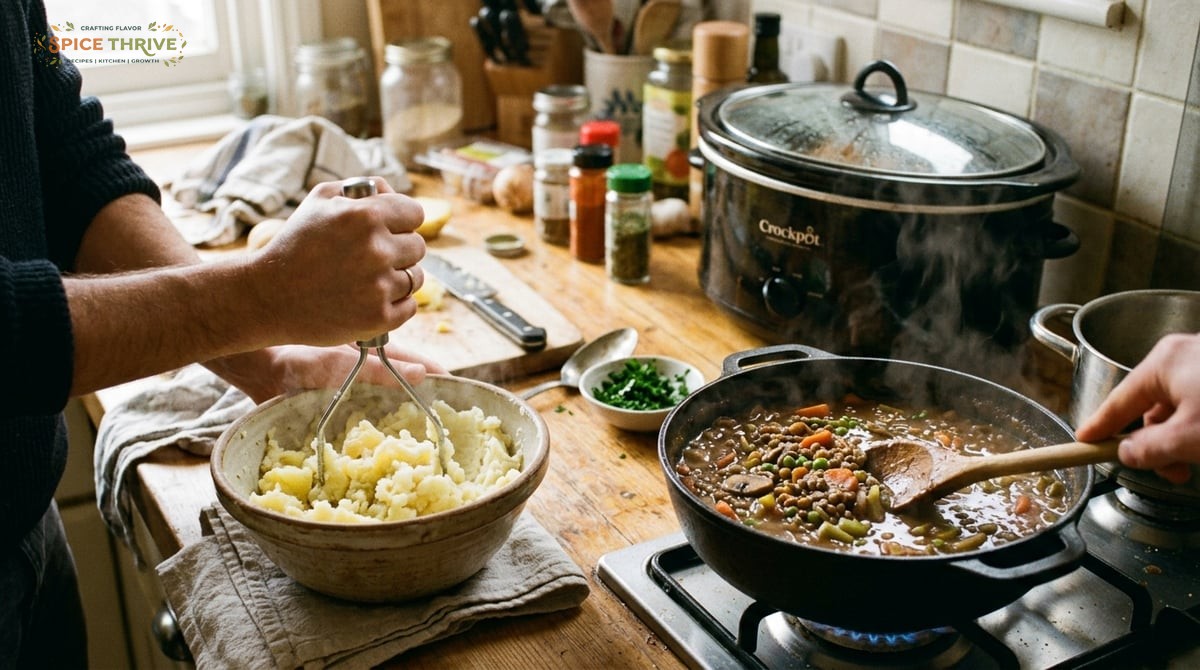
- Potatoes for the mash: About 40 minutes before the filling is ready, boil your potatoes until very soft. Drain well, then mash with olive oil, non-dairy milk, salt, and pepper. You want them really creamy and spreadable, not dry or stiff. Taste for seasoning. For fluffier potatoes, use a potato ricer, which helps avoid gumminess. If you want an herby finish, add a tablespoon of chopped chives or parsley to the mash.
- Finishing touch: Carefully spoon the mashed potatoes over the hot vegetable-lentil filling in the crockpot. Use the back of a spoon to swirl and create little peaks. Cover and heat on low for 30-40 minutes more, until the top is steamy and edges just start to turn golden. (If your crockpot is oven-safe, you can brown it under a broiler for a few minutes for extra color, but it’s optional.) Some readers like to sprinkle smoked paprika or a little vegan cheese over the top before the last heating step. Broiling for just a few minutes gives irresistible golden edges and evokes that traditional oven-baked look.
- Final flourish: Scatter with fresh herbs if you like. Scoop and serve—watch for the steamy plume and breathe in those savory smells! Consider offering a grind of black pepper or a touch more tamari at the table to intensify flavors for each serving. The pie holds its shape well once slightly cooled, making beautiful servings every time.
Personal Tips & Real-World Fixes (What I Learned from Testing)
- Tested four times, learned a lot: The first run was watery. I learned to leave the lid off for the last bit, or reduce the broth slightly. If prepping ahead, measure your liquids carefully—excess moisture can make the pie soupy, but a drier filling won’t meld well. It was also clear during testing that the type of lentils really matters—brown or green lentils gave a firmer bite, while red lentils dissolved too much into the sauce.
- Mushrooms make a big difference: If you skip them, you’ll miss a lot of savoriness. They mimic the richness of meat. For mushroom skeptics, try a blend of half mushrooms and half extra carrot—my cousin’s favorite compromise after she claimed to “hate mushrooms.” The final flavor is still wonderfully deep and satisfying, especially if you add a splash more tamari or a handful of roasted walnuts. Mushrooms also release natural glutamates during slow cooking, amping up umami for that “I can’t believe it’s vegan” feeling.
- Mashed potato matters: Overcooked potatoes turn gluey. Boil just until soft, drain well, and mash while hot with enough liquid. For truly creamy, restaurant-style mash, a potato ricer or food mill helps get that perfect smoothness. If you’re using Russet potatoes, add a tablespoon more olive oil to make up for their drier texture compared to Yukon Golds. I also recommend warming your non-dairy milk before adding to the potatoes to prevent cooling and dryness.
- Under-seasoning is a common mistake: Lentils and potatoes both absorb salt—taste each layer before you assemble. Adding seasoning in stages—especially salt, pepper, and herbs—helps ensure flavor carries through every bite. I’ve found that the modest addition of a teaspoon of nutritional yeast can impart a subtle cheesiness and extra depth if desired, especially for those familiar with classic English cottage pies.
- If you want “crust,” spread the potatoes thickly and use broiler finish if possible. If not, just cover and let heat through—the edges will still get golden at the bottom of the crock. For a crisper top, brush a little olive oil over the mash before broiling or final heating. The broiler finish also caramelizes any added vegan cheese, creating a golden, bubbly crust for visual and textural appeal.
Testing different broth brands and non-dairy milks also taught me that the quality of a few ingredients makes a big difference in flavor. Trust your taste buds as you go, and don’t worry if it’s not perfectly neat. Shepherd’s pie is about comfort, not perfection! Don’t be afraid to improvise with available produce or pantry swaps—one of my favorite versions came together with leeks, sweet potatoes, and an extra pinch of smoked paprika when I’d run low on standard ingredients.
Making It Your Own: Variations and Dietary Swaps
- Different veggies: Add parsnip, sweet potato, or chopped spinach with the lentils for a twist. Chopped kale or Swiss chard are hearty winter additions, especially if stirred in during the last hour of cooking so they melt into the filling. Roasted butternut squash diced into cubes works well too and pairs beautifully with thyme.
- Legume swap: Instead of lentils, try black beans or canned chickpeas (added halfway through). If using chickpeas, I recommend a dash of smoked paprika or cumin to complement their more neutral flavor profile. For extra protein, a mix of lentils and white beans is also lovely and changes up the texture.
- Dairy-free but extra creamy: Use coconut cream in the mash for a richer topping. Silken tofu whisked with non-dairy milk works for a protein boost in the potatoes without added fat, and gives a silky mouthfeel for those wanting a lighter finish.
- Lower carb: Cauliflower mash instead of potatoes. Boil cauliflower florets until soft, then mash with olive oil and vegan milk. I sometimes blend half cauliflower and half potatoes for a lighter, flavorful mash that still satisfies. Topping the pie with root vegetable swirls (parsnip, celery root) also makes a dramatic and delicious low carb version.
- Soy-free: Replace tamari with coconut aminos and choose soy-free non-dairy milks. Even a touch of seaweed flakes can lend umami if you want to skip soy-based products altogether.
- Bulk it up: Add a handful of quinoa or millet with the lentils for a heartier filling (increase broth by 1/2 cup). Barley (if gluten is not a concern) or amaranth are nourishing options, but always check your pantry for grains that cook at a similar rate as the lentils so nothing gets mushy.
- Top with vegan cheese: Sprinkle a handful of melty plant-based cheese on top before the final heating step. I recommend cheddar-style shreds for bold flavor or mozzarella-style for gooiness. Another favorite is nutritional yeast mixed into the mash itself for a subtly cheesy, nutty finish reminiscent of shepherd’s pies made with cheddar mash.
I love how adaptable this recipe is—play with what’s in your fridge and make it your own. Gluten free, vegan, nut free? No problem. Comfort for all! Once you’ve mastered the base recipe, experiment with spice blends (herbes de Provence, smoked paprika, or even curry powder) for new-world twists. My readers have reported delicious results with everything from roasted garlic mash to tempeh-studded filling—so let your taste and pantry guide you.
Storage, Reheating, and Make-Ahead Tips
- In the fridge: Cooled leftovers keep well in an airtight container for up to 5 days. The flavors deepen overnight and reheated portions are just as cozy. Potatoes may firm up in the fridge but loosen when reheated with a splash of plant milk. Leftovers are perfect in lunchboxes the next day and often taste even better.
- Freezer friendly: Cool fully, scoop into freezer-safe containers, and freeze up to 2 months. Thaw overnight in the fridge before reheating. Individual portions can be wrapped and frozen for quick weeknight meals or single servings, making this recipe a favorite for meal planning.
- For meal prep: Assemble the lentil-veggie filling a day in advance and store separately from the mash (fridge, up to 2 days). When you’re ready, reheat both, then layer and warm through in the crockpot, stovetop, or oven. This makes it a fantastic option for holidays or potlucks—just assemble and heat while guests arrive.
- Reheating: Microwave individual portions or rewarm in the oven (covered, 350°F/180°C until hot). I add a splash of dairy-free milk if the potatoes seem dry. For the best texture, stir the mash gently with a fork to fluff before serving.
- The most important tip: Always cool and store promptly for food safety—especially with lentil dishes. I recommend dividing large batches into shallower containers for quicker cooling. If you’re freezing, label with the date so you can keep an eye on freshness.
Printable Vegan Gluten Free Crockpot Shepherd’s Pie Recipe Card
Printable Recipe Card
- Prep time: 25 minutes
- Cook time: 7-8 hours (crockpot, hands off)
- Total time: 8 hours
- Servings: 6 hearty portions
Ingredients
- 1 cup (190g) dried brown lentils
- 2 cups (160g) cremini or white mushrooms, chopped
- 1 cup (130g) carrots, diced
- 1 cup (100g) celery, diced
- 1 large (180g) onion, diced
- 1 cup (130g) peas (fresh or frozen)
- 4 cloves garlic, minced
- 2 tbsp (30g) tomato paste
- 2 cups (480ml) vegetable broth
- 2 tbsp (30ml) tamari (gluten free) or coconut aminos
- 1 tsp dried thyme
- 1 bay leaf
- 5 medium (1kg) Yukon Gold potatoes, peeled and chopped
- 1/2 cup (120ml) unsweetened non-dairy milk (almond, oat, soy)
- 3 tbsp (45ml) olive oil or vegan butter
- Salt and pepper, to taste
Instructions
- In the crockpot, add onion, garlic, carrots, celery, mushrooms, lentils, tomato paste, broth, tamari, thyme, and bay leaf. Stir to combine.
- Cover and cook on low for 6-7 hours (or high for 4), until lentils are tender and most liquid has absorbed. If needed, leave lid off for last 30 minutes to thicken. Remove bay leaf.
- About 40 minutes before the filling is ready, boil potatoes until fork-tender. Drain, mash hot with non-dairy milk, olive oil, salt, and pepper.
- Spoon mashed potatoes over hot filling in crockpot. Swirl the top. Cover, cook on low for 30-40 more minutes, until heated through. Broil for color if desired and crockpot insert is oven-safe.
- Scoop, serve hot, and enjoy!
Estimated Nutrition (per serving)
- Calories: ~360
- Protein: ~13g
- Fat: ~8g
- Carbs: ~58g
Allergen Notes
- Gluten free (confirm tamari and broth)
- Vegan (no animal products)
- Nut free option: Use oat or soy milk in place of almond
Retested and updated: June 2024
Let Me Know If You Try It!
If you make this cozy crockpot vegan gluten free shepherd’s pie, I’d love to hear how it turns out for you! Tag @spicethrive on Instagram or drop a comment below with your tweaks and serving ideas—did you try a cauliflower topping, or sneak in extra greens? Every kitchen’s different and I can’t wait to see your versions.
If this recipe brought some comfort to your weeknight, check out my Vegan Thai Red Curry and Easy Gluten-Free Flatbread for more plant-powered dinners. Happy cooking!
— Emily, Spice Thrive | About Me
Common Questions
Can I bake this shepherd’s pie instead of using a crockpot?
Yes! Prepare the filling as directed on the stovetop, spread in a casserole dish, top with mash, and bake at 375°F (190°C) for 25-30 minutes.
What’s the best non-dairy milk for the mashed potatoes?
I’ve had good results with unsweetened almond, oat, and soy milk. Coconut milk makes it extra rich but brings some coconut taste.
Is this recipe nut free?
It can be! Use oat or soy milk instead of almond milk and double-check all packaged ingredients for cross-contamination warnings.
Can I make this ahead for a party?
Absolutely. Prepare up to layering the potato topping, cover and chill. Reheat and let it get bubbly before serving. Let guests dig in family-style.
How do you thicken a watery shepherd’s pie filling?
Leave the lid off the crockpot for the last 30-45 minutes, or stir in a spoonful of instant mashed potato or gluten free flour to absorb extra liquid.
Does this taste like traditional shepherd’s pie?
Surprisingly, yes! The umami from mushrooms, lentils, and tamari brings classic savory notes, while the potatoes deliver comfort—no one misses the meat.
This article was created with the help of AI. Images may also be AI-generated.