Soft, Creamy Sous Vide Egg Bites: A Kitchen Favorite
There is something wonderfully comforting about the aroma of eggs gently cooking in the kitchen—especially when they’re about to be transformed into melt-in-your-mouth, creamy egg bites. My first try making sous vide egg bites was honestly a bit of a mess (think: watery middles and uneven texture), but after testing this technique six different times, I finally nailed a formula that gives you that barista-style texture every single batch. This recipe was inspired by a weekend brunch at home, where I wanted to capture the rich, pillowy texture of café egg bites—without trekking out or paying coffee shop prices! Today, I make these for family brunches, meal prep, or the occasional breakfast-for-dinner night. The flexibility of sous vide egg bites cannot be overstated; I’ve served them at baby showers with smoked salmon and dill, packed them in lunchboxes, and even customized them for picky eaters (plain cheese for one, spicy chorizo and jalapeño for another). Plus, unlike baked egg muffins—which can seem spongy or dry—the sous vide method locks in moisture for results that taste gourmet even days later. Let me show you exactly how to get them right, with plenty of tested swaps and flexible add-ins.
Why This Sous Vide Egg Bites Recipe Works
- Cloud-like Texture, Every Time: Sous vide gives remarkable temperature control, so you get impossibly soft, creamy egg bites instead of overcooked or rubbery ones. No oven guesswork. This level of heat control is nearly impossible with traditional baking. When eggs are heated too quickly or to too high a temperature, even by just a few degrees, they tighten and squeeze out water, resulting in a dense or rubbery outcome. With sous vide, you eliminate the variability, guaranteeing that tender, souffle-like consistency throughout.
- Endless Flavor Options: The basic custard is a blank canvas for your favorite cheeses, veggies, or proteins—same method, new results each time. One week, try gruyère and scallions for a quiche Lorraine spin; another, add smoked gouda, sautéed mushrooms, and fresh thyme. For a protein boost, stir in pre-cooked sausage, crumbled feta, and wilted spinach. You can even get creative with world flavors by mixing in miso and scallions or chipotle and poblano.
- Hands-off Breakfast Meal Prep: The bags or jars go in the water bath and you’re free to clean up, sip coffee, or prep toppings. This is a lifesaver when multitasking, as active cooking time is minimal. The sous vide does the work while you batch-cook bacon, toast bread, or even get ready for the day—a real win for busy mornings or leisurely brunches alike.
- Great for Groups, Easy for One: You can double or halve the base, pour it into whatever jars or molds fit, and refrigerate all week—ready to grab and reheat. The method is incredibly scalable, making entertaining simple. For the solo eater, a single batch can deliver breakfast (or snack) for several days with zero extra effort.
- Fork Tender, Never Gritty: Batch testing showed that just the right ratio of eggs, dairy, and low heat makes them silky and uniform—no gritty cheese bits or dry edges, even after reheating. This is thanks to the thorough blending and temperature control of sous vide, which differs from baked recipes that sometimes result in tough or curdled eggs. Reheating doesn’t diminish quality when these elements are in place—something you definitely notice if you’ve ever had rubbery leftovers from a coffee shop.

Ingredient Notes and Substitutions
Eggs: 6 large (about 300g). The heart of the recipe. High-quality, fresh eggs make a difference for flavor and texture. A local farm egg, with rich orange yolks, yields a deeper flavor, but standard grocery eggs work well.
Cottage Cheese or Cream Cheese: 1/2 cup (120g). Cottage cheese gives the classic smooth texture and a bit of tang, but cream cheese makes a richer, silkier bite. Greek yogurt works in a pinch and gives a pleasant acidity and lightness. If you use Greek yogurt, make sure it’s whole milk for the same lush effect.
Shredded Cheese: 1/2 cup (60g). Monterey Jack, Gruyère, or cheddar all melt beautifully. Go for full fat for creaminess. Smoked cheeses (smoked gouda or scamorza) will add a subtly smoky undertone—perfect with ham or roasted sweet peppers. For a more assertive flavor, use sharp cheddar or even blue cheese in small amount balanced with milder cheese.
Whole Milk or Half-and-Half: 1/4 cup (60ml). Half-and-half brings extra richness. Milk keeps them lighter. Dairy-free milk (like oat or unsweetened soy) works if needed. For a lactose-free version, lactose-free cow’s milk is nearly indistinguishable in taste and texture.
Salt: 1/2 teaspoon (3g). Adjust to taste, especially with salty cheese. Taste your cheese base first—if using a salty cheese like feta, reduce the added salt slightly. Black pepper or white pepper can add a subtle bite.
Optional add-ins: Sautéed spinach, roasted peppers, chopped ham, cooked bacon, caramelized onions, or even a pinch of smoked paprika for color and warmth. Roasted cherry tomatoes, cooked mushrooms, or diced sun-dried tomatoes work especially well. Try a teaspoon of pesto swirled into the jar for an herby, visually appealing finish.
Note: For vegan or dairy-free, see swaps below in Variations.
Step-by-Step: How to Make Sous Vide Egg Bites
- Set Up the Sous Vide Bath
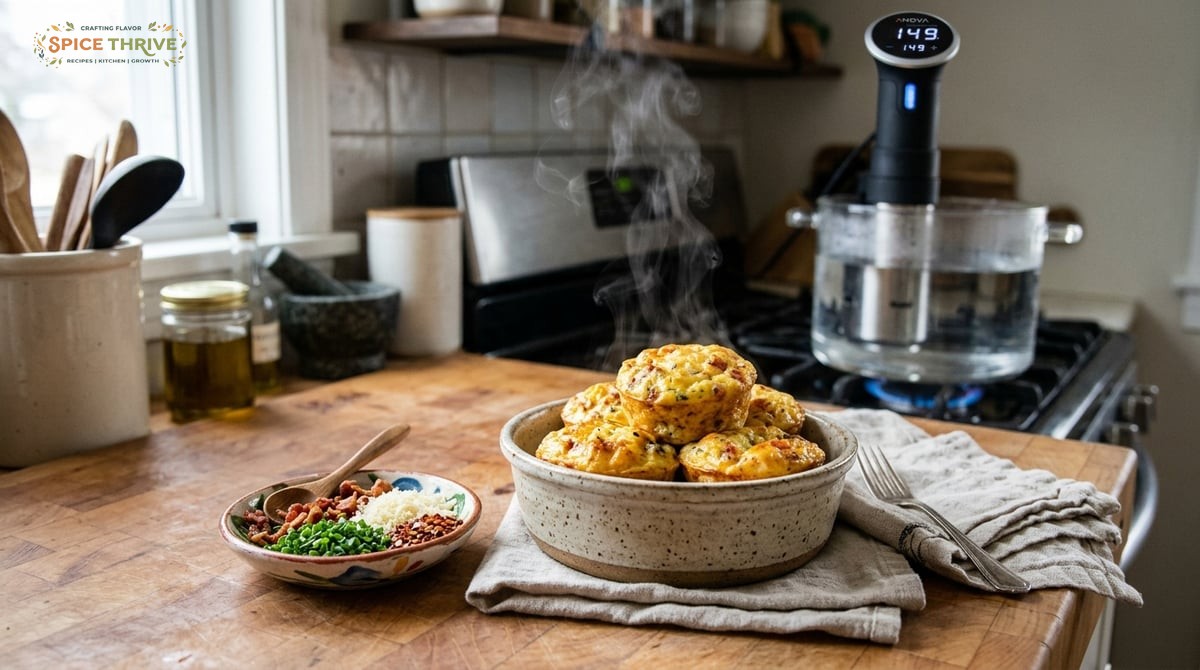
Fill a large pot or deep container with hot water. Clip on your sous vide circulator and preheat to 172°F (78°C). This is the sweet spot for tender, just-set eggs. Make sure the container comfortably fits all your jars or molds without crowding, so the water can circulate around each for even cooking. Placing a rack or folded towel in the bottom can prevent jars from rattling. - Blend the Custard Base
In a blender, combine eggs, cottage cheese or cream cheese, milk, salt, and shredded cheese. Blend on high until totally smooth and foamy, about 30-45 seconds. The mixture should pour like thick cream—no lumps. A blender incorporates air, giving a slight soufflé lift to the bites and ensuring no bits of cheese or curds remain. If you’re adding stronger flavors (e.g., garlic powder, sun-dried tomato oil), add these in the blending step so they’re evenly dispersed. For best results, scrape down the blender sides once halfway through blending. - Prep Your Containers
Lightly grease small (4 oz/120ml) canning jars, silicone molds, or heat-safe glass containers. Pour the egg mixture in, filling each just below the rim. Add any extras (cooked bacon, veggies, etc.) and use a chopstick to swirl in gently. To layer flavors, add a few of your mix-ins to the bottom of each jar first, then pour the custard over and swirl. This gives a pretty marbled effect and ensures even distribution of add-ins. - Seal and Submerge
If you’re using jars, close finger-tight (not super tight!). If using silicone molds, seal with foil or a tight-fitting lid. Submerge containers until just under the water, making sure water covers the sides but not the tops completely. If needed, weigh down lightweight molds with a bowl or spoon to prevent floating. Leaving some air in each jar allows pressure changes during cooking without cracking or leaking. - Cook, Then Cool
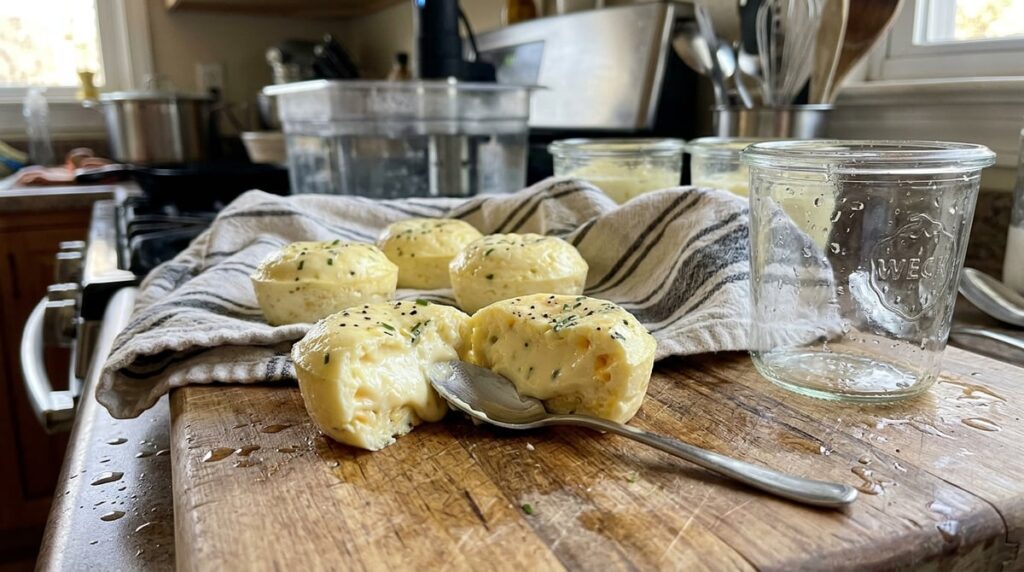
Sous vide at 172°F for 55-60 minutes. When done, let jars cool on a towel for 10 minutes—the egg bites firm up as they sit but stay meltingly creamy inside. You’ll notice the top may look slightly wobbly when you first remove the jars—that’s okay. They will finish setting from residual heat. - Release and Serve
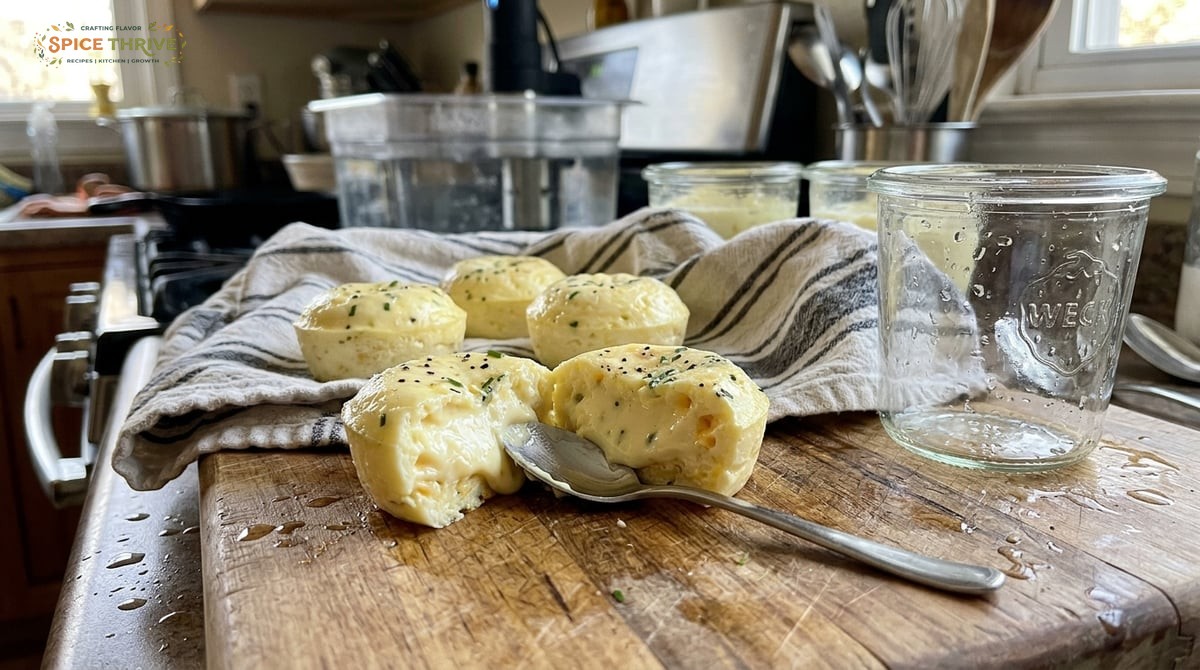
To remove, run a small offset spatula around the edge or gently invert onto a plate. Serve warm as is, or top with sriracha, sliced scallions, or crispy shallots. These bites are equally delicious at room temperature, making them great for brunch spreads or bento boxes. For a coffee shop-style finish, add a dollop of crème fraîche or a sprinkle of chives just before serving.
Pro Tips, Fixes, and Troubleshooting
- Blending Is Key: I learned after my first attempt that whisking by hand is not enough for a perfectly creamy bite. Blending incorporates air for that soufflé fluff. An immersion blender works if you don’t have a stand blender—just blend thoroughly so all cheese is emulsified and no chunks remain. If you do end up with curdled or grainy bites, overmixing is rarely the culprit—usually it’s under-blending or too-high heat.
- Overfilling Leads to Leaks: The first batch overflowed when I filled jars too high. Stop just below the rim for a clean remove and even texture. Keep in mind the mixture will rise slightly as it cooks. For perfect portions, fill jars or molds about 80-90% full. Overfilling not only risks spills but creates dense, uneven results.
- Don’t Overtighten the Lids: This traps steam inside, which turned my eggs a bit rubbery. Just finger-tight lets air escape for that gentle custard set. Overtight jars can also crack from pressure. Hand-tighten, then very gently back off a quarter turn.
- Trouble Shooting Watery Bites: If you find a pool of liquid after cooking, the jars may not be sealed or the circulator could be too low. Make sure your water stays just above 170°F the whole time. Using a digital thermometer for spot-checks is wise, especially if your sou vide cooker is older or less reliable. If your add-ins are very watery (like spinach or zucchini), pre-cook and squeeze out excess liquid before using.
- For Crispier Tops: After popping out, broil the egg bites for 1-2 minutes for a delicious golden finish. A dash of shredded cheese added before broiling gives a bubbly, café-style look. Watch under the broiler closely—they can brown in seconds.
- If Working in Batches: If your vessel doesn’t fit all jars at once, do multiple rounds rather than cramming jars together, which impedes water flow and can cause uneven cooking. Water must circulate freely for uniform results.
- Avoid Sweaty Egg Bites: Let cooked jars cool with lids off for several minutes to vent off steam, so condensation doesn’t collect on the surface or lid. This keeps your egg bites pristine and prevents over-softening during storage.
Variations and Dietary Swaps
- Dairy-Free: Use plant-based milk (unsweetened oat or soy) and replace cheese with vegan cream cheese or shredded cheese alternatives. Miyoko’s or Violife brands melt well. If omitting cheese entirely, add two tablespoons of nutritional yeast for savory flavor and a tablespoon of olive oil for richness. Be sure any vegan cheese you use melts, as some older brands can remain rubbery or separate.
- Vegetarian: The base recipe is vegetarian. Add roasted veggies, shiitake mushrooms, or kimchi for a twist. Try blanched asparagus tips, marinated artichokes, or diced sundried tomatoes for Mediterranean flavors. If using vegetables high in moisture (e.g., spinach, zucchini), sauté and blot dry before mixing in.
- Gluten-Free: No flour or breadcrumbs added, so it’s naturally gluten-free. Just check any toppings or store-bought add-ins. Gluten can sneak in with processed meats or certain seasonings—read those labels! For a special touch, serve with gluten-free toast points or roasted sweet potato rounds.
- Asian-Inspired: Add a splash of soy sauce (tamari for GF), a pinch of white pepper, and chopped scallions for a Chinese-style steamed egg flavor. Top with chili crisp. For a Japanese flair, stir in a teaspoon of miso paste and garnish with furikake after cooking.
- Spicy Tex-Mex: Use pepper jack cheese, green chilies, and a pinch of smoked paprika. Top with salsa or chipotle hot sauce. Crumbled chorizo, diced red bell pepper, or even black beans boost protein and add Southwest flavor. For a colorful tray, alternate with roasted corn and cilantro.
- Make-Ahead & Freezer Friendly: Cool completely, then wrap airtight and freeze up to 2 months. Thaw in fridge, then reheat (see storage tips below). Egg bites can be portioned individually, making them ideal for grab-and-go breakfasts or lunchboxes. For best results, let them cool uncovered to avoid sogginess before freezing or refrigerating. Store them in silicone muffin liners or parchment to keep them from sticking together in the freezer.
Storage, Reheating, and Make-Ahead Tips
- Fridge: Cooled egg bites keep in a sealed container up to 5 days. Let them cool uncovered first to avoid condensation inside the container. For max freshness, layer parchment paper between bites to minimize sticking or sogginess. Store near the front of the fridge, away from the coldest spots, to prevent textural changes.
- Freezer: Wrap them individually in parchment and place in a zip-top bag or airtight container. Thaw overnight in the fridge before reheating for best texture. You can also defrost in the microwave on a low setting if you’re short on time, but this may cause slight texture softening. Egg bites can be frozen with or without add-ins and are perfect for batch meal prepping.
- Reheating: Microwave 30 seconds at a time (cover with a damp towel), or steam gently for 2-3 minutes—prevents drying out or rubbery edges. If broiling, brush with butter for a glossy top. To revive the just-cooked custardy texture, place bites in a covered dish and reheat in a 300°F (150°C) oven for 10 minutes. For lunchboxes, let come to room temp (they’re great chilled or lightly warmed).
- Meal Prep: Pour the blended base into jars, add add-ins, and refrigerate overnight. In the morning, the jars can go straight into the sous vide bath from the fridge—just add 5 minutes to cook time. This is perfect for prepping ahead for special occasions or brunch events. Labeled jars mean you can easily customize batches for different eaters (vegetarian, spicy, kid-friendly).
Ready to Try These Sous Vide Egg Bites?
If you make this recipe, I’d love to know how your egg bites turned out—leave a comment below or tag @SpiceThrive on Instagram. For more step-by-step guides, check out my Fluffy Chinese Steamed Eggs or Savory Breakfast Muffins. Kitchen growth is all about trying, tweaking, and tasting—so don’t be afraid to make these your own!
Recipe and photos by Alex Park, home cook & recipe developer. Learn more about me.
Last updated: June 2024 after new batch testing.
Common Questions
Can I make sous vide egg bites without a sous vide machine?
You can mimic the technique using a steady oven water bath and heatproof jars or a slow cooker on the lowest setting. Precision is trickier, but watch closely and use an accurate thermometer. The results are generally very good if you carefully monitor the water, but sous vide provides the most foolproof, repeatable texture.
What jars or molds work best for these egg bites?
Small (4 oz/120ml) canning jars, silicone egg bite molds, or any heat-safe glass container with a tight seal. Avoid plastic or lids that can warp at high temps. For a fun presentation, try ceramic ramekins (as long as they fit in your vessel). Silicone molds release egg bites easily, but cover tightly with foil to prevent water from seeping in.
Can I meal prep these ahead?
Yes! Egg bites store well for up to 5 days in the fridge or 2 months in the freezer. For weekly meal prep, cook once and enjoy grab-and-go breakfasts all week. You can reheat directly from the fridge or thawed from freezer for a minute in the microwave or gently warm in a steamer.
How do I prevent runny or watery egg bites?
Make sure your jars are well-sealed, filled just below the rim, and your sous vide water stays at 172°F. Blending the mixture fully helps keep the texture uniform. Blot or pre-cook watery add-ins (like spinach or mushrooms) before adding them, as excessive moisture is a common culprit.
How do I avoid rubbery or overcooked bites?
Use precise temperature control (sous vide or accurate thermometer), don’t overtighten lids, and blend the custard for that even set. Make sure to cool with lids off for a few minutes after cooking to let residual steam escape.
Allergen notes?
Contains eggs and dairy. Dairy-free and vegetarian swaps are suggested above. For full allergen disclaimer, see recipe card. For nut allergies, be aware that some vegan cheeses and plant-based milk alternatives are nut-derived. Always double-check ingredient labels for triggers.
This article was created with the help of AI. Images may also be AI-generated.