Cozy Dinners, Global Flavors: Why I Love Cooking With Ground Sausage
I grew up in a family where dinner was always the best part of the day. Mom’s sizzling skillets of sausage and peppers, the aroma of crispy browning meat, those moments got me hooked on the simple magic of ground sausage. Now, in my own kitchen, I love exploring how this humble ingredient transforms everything from classic Italian pasta to spicy stir-fries and hearty casseroles. I’ve tested these recipes at least three times each, tweaking seasoning and cooking steps until every bite sings. Whether you crave something cheesy and comforting or crave bold Asian flavors, ground sausage is the shortcut I reach for on weeknights. Below, I’ll walk you through my most reliable, flavor-rich sausage dinners—each a little different, each full of heart.
Why These Recipes Work (and Why You’ll Love Them)
- Ground sausage does the heavy lifting on flavor. With its blend of spices and juicy texture, even a small amount seasons an entire dish deeply—no need to spend hours building flavor from scratch. Because ground sausage is typically already seasoned with a unique combination of herbs and spices (like fennel, garlic, paprika, and sometimes even wine), it takes much of the guesswork out of seasoning. You end up with layers of flavor built right in, so a simple sauté can develop a rich, savory base for stews, sauces, or stir-fries. This trait makes ground sausage especially useful when you want dinner to taste like it took all day without the commitment.
- Flexible with global twists. From garlicky Italian rigatoni to umami-packed Chinese-style stir-fried sausage and bok choy, these recipes highlight how adaptable ground sausage is to any cuisine. It partners naturally with aromatic flavor bases—from sofrito in Spanish dishes to ginger and scallion in Asian recipes—or can be simply mixed with rice and beans for a comforting, one-bowl meal. For example, in a Spanish-inspired dinner, you might create a quick sausage and rice skillet seasoned with smoked paprika and roasted red peppers. Or, for a Middle Eastern flair, blend crumbled sausage with chickpeas, cumin, and a squeeze of lemon for a protein-rich stew that pairs beautifully with flatbread.
- Tested real-life solutions. Every dish here comes from my own kitchen, tested multiple times. I troubleshoot tricky parts—like avoiding greasy texture or blandness—so you can skip straight to great results. If an ingredient swap works well (for example, using turkey sausage in place of pork without sacrificing juiciness), I note it. Timing is adjusted to prevent overcooked veggies or gummy pasta. I test with both conventional and plant-based sausage to ensure everyone gets a tasty outcome. These aren’t just recipes—they’re weeknight survivors, crafted for real home cooks with busy schedules and varied dietary needs.
- Perfect for weeknights or gatherings. Many of these can be prepped ahead or cooked all in one pan. They come together fast, but still feel special enough to share. For busy weeknights, one-skillet dishes allow for hands-off simmering while you prep a quick salad, and cleanup is simpler too. Still, the bold flavors and comforting textures make these perfect for a casual dinner party or potluck—just scale up the recipe and prepare to take home an empty dish.
- Sensory payoff. Expect golden brown edges, savory aromas, and saucy, hearty bites—like the comfort food you crave with a little spice and snap. There’s something satisfying about the way sausage caramelizes, releasing juices into the sauce so it clings to pasta, rice, or bread. Every element, from bubbling cheese to herby tomato sauce, is designed to provide that deeply cozy, rib-sticking payoff that makes home-cooked meals unforgettable.
Ingredients: What You Need and Creative Swaps
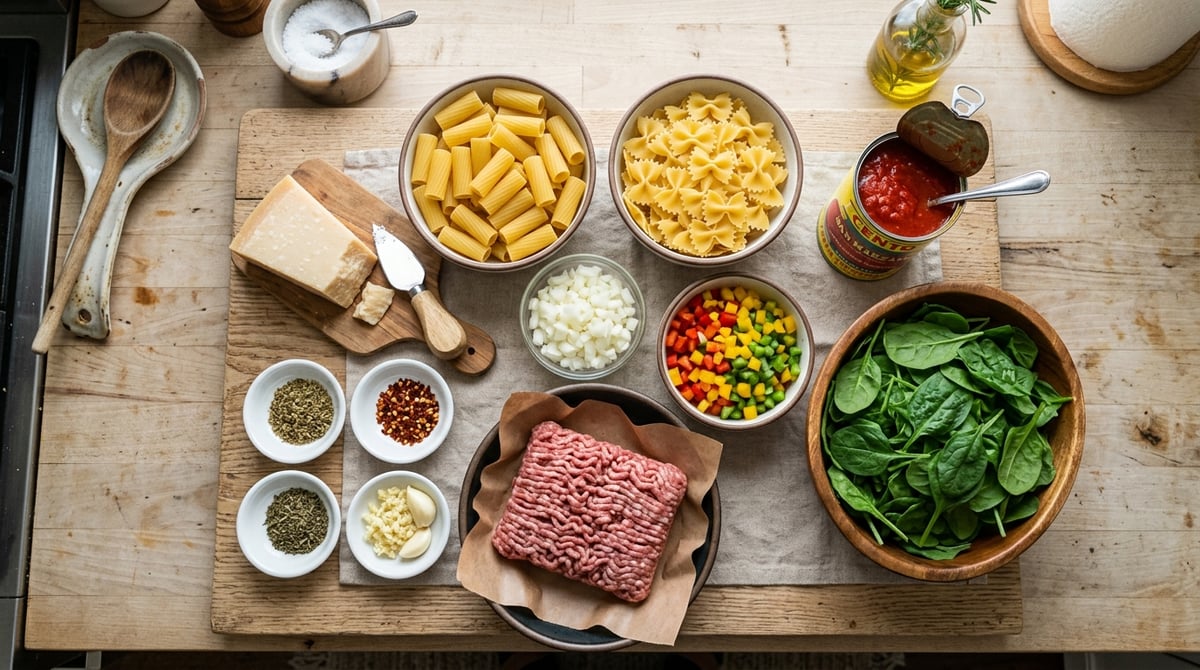
These ground sausage dinner recipes use pantry-friendly ingredients—plus a few bold flavor boosters. For each dish, I list measurements in cups and grams. Here’s what you’ll see most often, plus some reliable substitutes:
- Ground Sausage – 1 pound (450g). Italian sweet or hot, turkey, chicken, or even plant-based sausage works! Make sure it’s uncooked so you can brown and crumble it for great texture. If you’re looking for a leaner meal, turkey or chicken sausage adds classic flavor with less fat. Plant-based sausages now come in spicy or herby styles and work just as well, maintaining that rich sausage flavor for vegetarians or anyone looking to eat less meat.
- Pasta or Rice – 2 cups (200g dry pasta or uncooked rice). Penne, rigatoni, or jasmine rice are all delicious. Gluten free rice or GF pasta for allergies. Small pasta shapes catch bits of sausage and sauce, while rice or even grains like farro provide a heartier or nuttier twist. For quick dinners, try instant brown rice or couscous—both absorb sauce beautifully and shave minutes off the cooking time.
- Onions & Garlic – About 1 cup diced onion (150g), 3-4 garlic cloves (12g), for rich flavor bases. Shallots or leeks can substitute in milder dishes. The sweetness from onions and the aromatic punch of garlic help create a savory backbone no matter which cuisine. If onions or garlic are unpalatable for some diners, try using fennel bulb or the whites of scallions for a similar depth with a gentler flavor.
- Bell Peppers, Greens, Veggies – 2 cups chopped (250g). Use spinach, kale, bok choy, broccoli, or whatever’s fresh. Zucchini and mushrooms soak up flavor beautifully. A blend of sturdy and leafy veggies keep dishes lively—think peppery arugula, crisp snap peas, or roasted eggplant. Roasted butternut squash adds sweetness to sausage casseroles, while fresh corn or even thawed frozen peas can brighten flavor profiles and add color.
- Canned Tomatoes or Broth – 1 can crushed tomatoes (400g) or 2 cups (475ml) chicken/veg broth. Liquids help make cozy sauces and keep dinners moist. If tomatoes aren’t your favorite, swap in a creamy sauce made by stirring cream or coconut milk into your pan—especially good with spicy sausage. Bone broth or miso broth can also add wow-factor to simple rice or pasta sausage skillets.
- Cheese – 1–1 1/2 cups grated (100–150g), usually part-skim mozzarella, parmesan, or sharp cheddar. Nutritional yeast for a dairy-free swap. For extra flavor, try smoked gouda, pepper jack, or even a sprinkle of feta before serving. For a lighter option, stir in a spoonful of ricotta or cottage cheese just at the end for creamy tang—experiment with vegan shreds for fully plant-based comfort.
- Seasonings – Salt, pepper, Italian herbs, chili flakes, soy sauce, ginger. Adjust to match your mood and what’s in your pantry. Fresh rosemary or thyme offer woodsy undertones, while smoked paprika or Cajun blends deliver boldness. Toasted sesame oil, five-spice, or za’atar encourage deeper international flavor profiles with just a sprinkle or drizzle at the finish.
Allergen notes: Sausage may contain gluten or dairy—read labels. Most recipes can be made gluten free using GF pasta or rice, and dairy free with cheese swaps. Many meals adapt easily for nut, soy, or egg allergies by using simple substitutions, or omitting optional garnish ingredients like pesto or breadcrumbs.
Step-By-Step Instructions: Restaurant-Quality Sausage Dinners at Home
Let’s walk through my favorite ground sausage dinner recipe: One-Pan Cheesy Sausage & Peppers Pasta. It’s classic, comforting, and customizable.
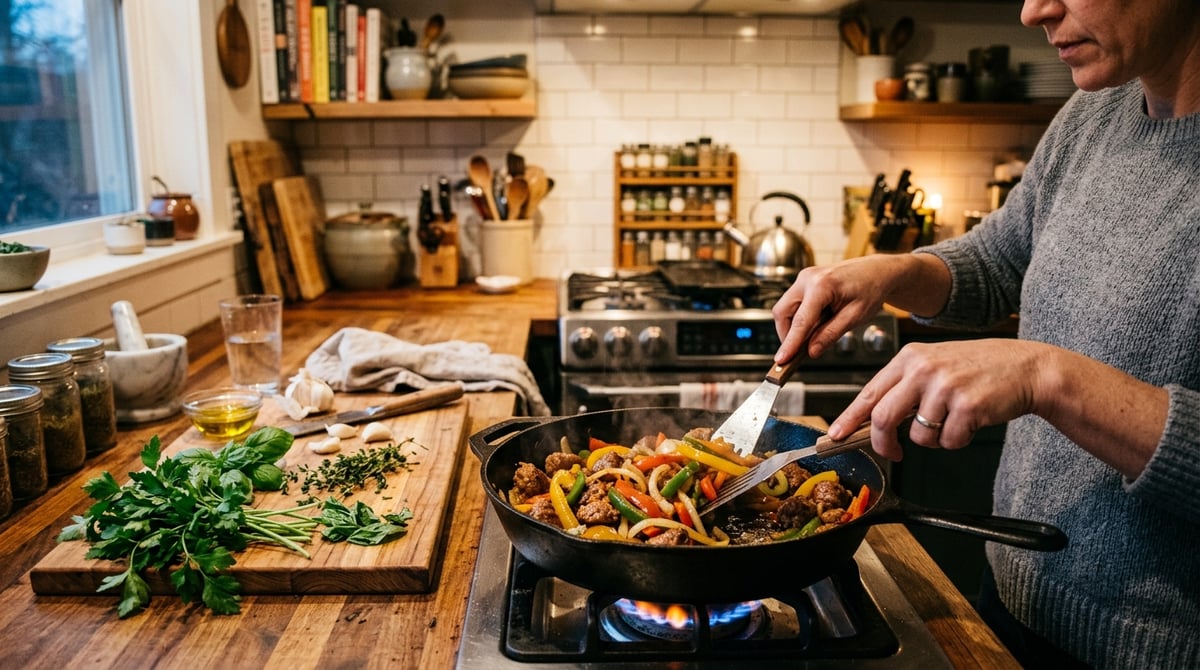
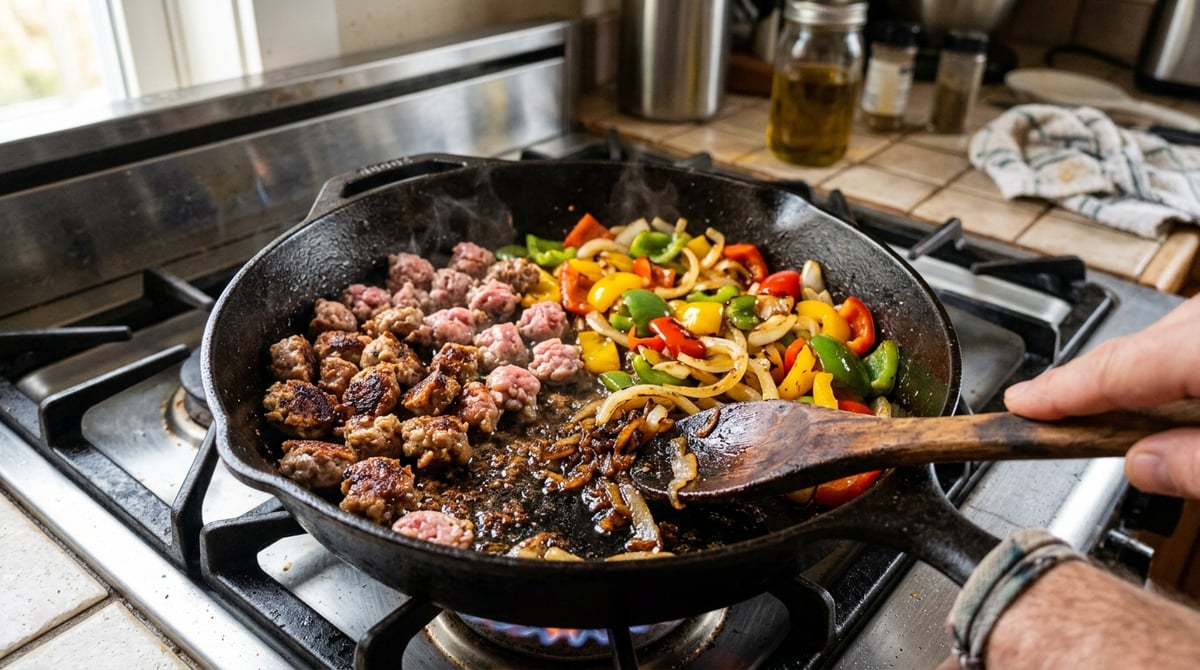
- Brown the Sausage. Heat a large skillet over medium high. Add 1 pound (450g) ground sausage, breaking it up. Cook 8-10 minutes, stirring, until golden brown with crispy, browned bits. Drain excess fat for a lighter result. Browning brings out nutty, savory undertones by caramelizing the meat, giving every bite incredible depth. If you like your sausage in larger chunks, resist chopping it up too finely—a blend of crisp edges and some bigger pieces creates more interesting texture.
- Sauté Veggies. Add 1 diced onion (150g), 2 diced bell peppers (200g), and 3 minced garlic cloves (12g). Cook 3-4 minutes, scraping up browned bits for big flavor. The veggies will pick up sausage drippings, absorbing flavor while softening just enough to stay sweet and vibrant. For extra color, toss in a handful of cherry tomatoes or a small zucchini—layering a mix of vegetables makes for prettier, more nutrient-dense results. Stir regularly and adjust heat down if vegetables are browning too fast.
- Simmer Sauce. Stir in 1 can (400g) crushed tomatoes, 2 teaspoons dried Italian herbs, and 1/2 teaspoon chili flakes. Bring to a simmer and cook 7-8 minutes until thickened and fragrant. Tomatoes will break down and uplevel into a rich, robust sauce coating the sausage and veggies. For a deeper taste, add a splash of red wine, a teaspoon of sugar, or a few torn fresh basil leaves. If you like more tang and less sweetness, a tablespoon of tomato paste will intensify flavors quickly.
- Add Pasta & Liquid. Pour in 2 cups (200g) dry pasta and 2 1/2 cups (600ml) chicken broth. Stir well, cover, and simmer 12-14 minutes, stirring occasionally, until pasta is al dente and the sauce is velvety. The pasta cooks directly in the sauce, absorbing all the sausage juices and spice. Choose a sturdy pasta shape that can stand up to hearty sauce—think rigatoni, penne, or fusilli. Check a minute before the timer is up: if needed, add a splash of broth or water to loosen the sauce before finishing.
- Finish with Cheese. Stir in 1 cup (100g) grated mozzarella and 1/4 cup (25g) parmesan until melted and gooey. Taste, adjust salt and pepper, and top with fresh basil if you have it. The cheese should pull into silky threads and bind everything together. Try broiling the skillet for 2-3 minutes at the end for a golden, bubbly topping with crispy cheese edges—restaurant quality results in a cozy, homey dish.
The sauce should cling to the noodles and veggies, sausage should be juicy, and everything should shine with a little sheen of melted cheese. It’s cozy food at its best. Serve straight from the pan family style—or individually plated with a crisp salad and warm bread for mopping up every last bit.
Pro Tips and Common Mistakes (Learned the Hard Way)
- Not draining sausage fat enough: The first time, my sauce was greasy. Now I tilt the pan and spoon off most of the oil before adding veggies, keeping just a bit for flavor. If you use a particularly fatty sausage, you might need to drain twice—after browning and again before adding broth or tomatoes. Leaving just a tablespoon makes for rich flavor without the heaviness.
- Veggies too soft: Overcooked peppers turn mushy. I add them after the sausage is well browned and cook only until slightly softened—still vibrant and sweet. Don’t be afraid to use a high-heat burst at the end to caramelize edges without overcooking the interior. This technique works especially well when using water-rich veggies like zucchini or mushrooms, which benefit from a quick, hot sauté.
- Pasta drying out or sticking: Stir the pasta every few minutes in the sauce, and add a splash of water if it looks too dry before it’s fully cooked. Pasta should absorb, not stick. Some pasta brands absorb more liquid, so be ready to flex—if you’re using gluten-free noodles or whole wheat, check early and frequently to avoid overcooking or uneven texture.
- Seasoning early: Sausage is salty! Always taste at the end, especially before adding more salt. The first try, I over-salted—now I go easy until the final taste. Between the sausage, cheese, and broth, the salt level can creep up faster than you think—always check before finishing the dish. For extra bright flavor at the end, try stirring in a squeeze of lemon juice or a sprinkle of fresh herbs.
- Testing tip: I’ve made this recipe five times, adjusting for brands of sausage (some extra fatty, some not), different shapes of pasta, and even plant-based sausage. All work, just pay attention to moisture and browning. Plant-based or lean sausage often benefits from a tablespoon of olive oil at the start to help with browning and carry flavor through the dish. If using smoked sausage or pre-cooked links, slice them and add after the onions for best caramelization.
Tasty Variations & Dietary Swaps
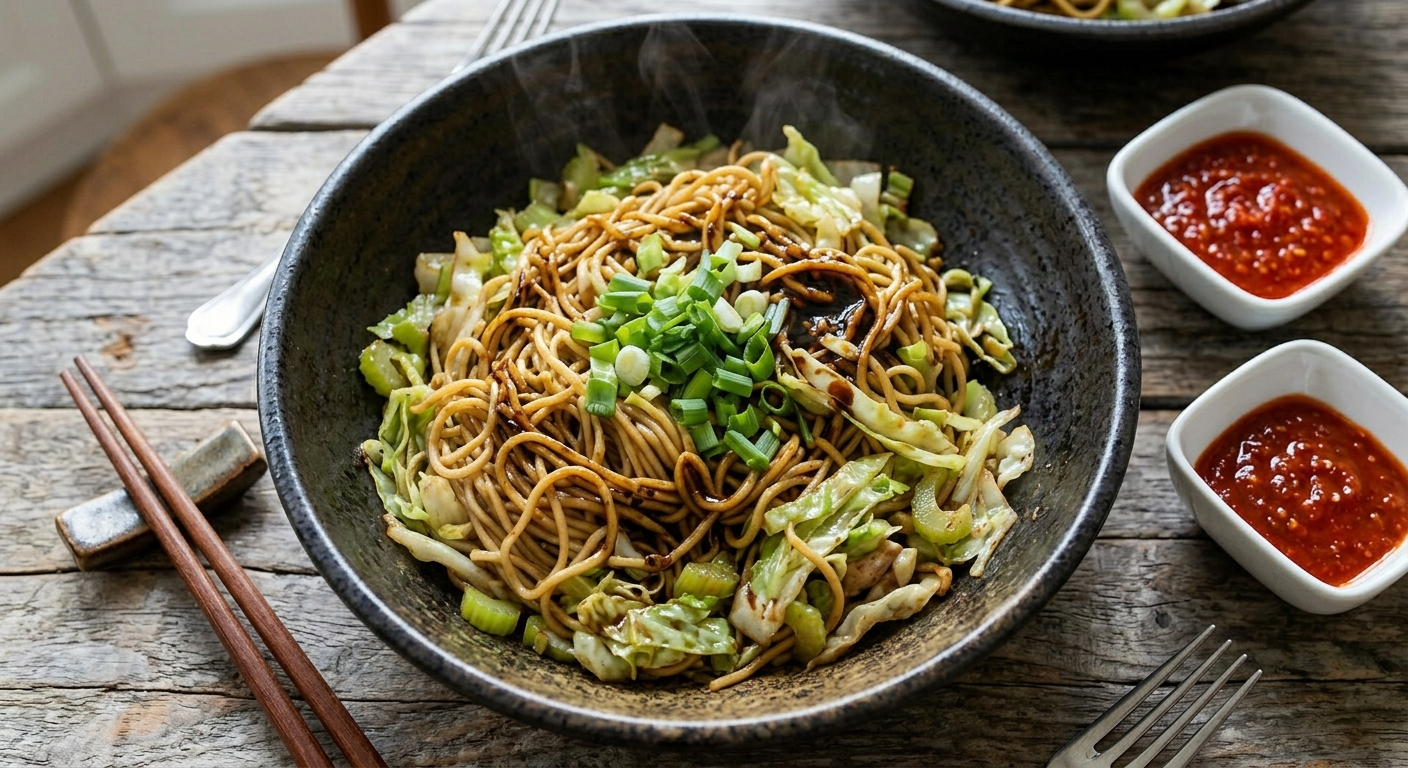
- Asian-Style Sausage Stir Fry: Swap Italian sausage for mild chicken sausage, add bok choy, snap peas, and ginger. Flavor with soy sauce, a dash of sesame oil, and serve over jasmine rice. For extra aromatic depth, stir in garlic, a small splash of rice vinegar, and sliced scallions. Consider garnishing with toasted sesame seeds or a quick cucumber salad for brightness. This technique works wonderfully with pre-cooked rice—use leftover grains for a five-minute dinner that still tastes fresh.
- Vegetarian/Vegan: Use plant-based sausage (like Beyond or homemade lentil sausage crumble). Opt for vegetable broth and vegan cheese—it still gets browned, saucy, and satisfying. Add extra umami by sautéing with mushrooms, using roasted eggplant for creaminess, or stirring in sun-dried tomatoes for tang. Nutritional yeast or a drizzle of olive oil with fresh herbs adds richness if vegan cheese isn’t your favorite.
- Gluten Free: Use gluten-free pasta or swap in cooked rice or quinoa. Double-check all sausage ingredients and use GF broth. Brown rice pasta holds up especially well in saucy dishes, while short grain rice or millet offer hearty, nutty backdrops. When making sheet pan dinners, swap wheat-based sides for roasted potatoes or sweet potatoes to keep everything satisfying and safe for all diners.
- Baked Sausage & Polenta: Spread soft, creamy polenta in a dish, top with browned sausage and a tomato ragù, bake until bubbling. For even more flavor, stir sharp cheese into the polenta (think parmesan, asiago, or a vegan smoky cheese). For a rustic touch, layer in roasted fennel or caramelized onions between the polenta and sausage sauce, then finish with a sprinkle of herbs just before serving.
- Sausage & Veggie Sheet Pan: Toss chunks of sausage, sweet potatoes, and brussels sprouts in olive oil and roast until everything is caramelized and golden. Toss with balsamic glaze to finish. Try adding carrots, red onion wedges, or parsnips for extra color and sweetness. If you like it spicy, sprinkle with chili flakes before roasting or finish with a dash of hot honey for a sweet-savory finish. Serve over a bed of greens or with crusty bread for a complete, fuss-free meal.
See more ground sausage recipes here for even more ideas and inspiration!
Storage, Reheating, and Make-Ahead Notes
- Storage: Cool leftovers quickly. Store in a tight container, up to 4 days in the fridge. Glass or BPA-free plastic containers keep aromas from escaping onto other foods. If you plan to eat portions over a few days, divide into single-serve containers to make lunchpacking or quick dinners even easier. Layer a paper towel on top before sealing to avoid excess moisture buildup and sogginess in some dishes.
- Reheating: Best in a skillet over gentle heat with a splash of water or broth to keep the sauce loose and pasta tender. Cover and heat through, stirring occasionally. Microwave also works, but skillet keeps better texture. For sheet pan or baked casseroles, cover loosely with foil before reheating in a 325°F oven until warmed through—this keeps moisture in and cheese from drying out. If reheating polenta, whisk in a bit of milk or broth to bring back its creamy texture.
- Freezer Notes: Most sausage pasta dishes freeze well, but cheese can get grainy. Freeze in portions, defrost overnight in the fridge, and reheat gently. I find Asian-style stir-fries freeze best without greens—add fresh when reheating. Avoid freezing dishes containing lots of fresh greens or high-moisture veggies, as they can break down and become mushy. Instead, freeze sausage in sauce or with pasta/rice, then add those delicate ingredients fresh when serving.
- Make Ahead: Brown sausage and prep the sauce 1-2 days ahead, storing components separately. Mix and finish with cheese just before serving for best results. For casseroles or sheet pan meals, assemble everything on a tray, wrap, and refrigerate up to a day ahead—just bake when ready. Label and date containers, so you keep track of freshness, and note any toppings to add just before baking or serving for best texture.
Printable One-Pan Cheesy Sausage & Peppers Pasta (Recipe Card)
One-Pan Cheesy Sausage & Peppers Pasta
- Prep Time: 15 minutes
- Cook Time: 30 minutes
- Total Time: 45 minutes
- Yield: Serves 4
Ingredients
- 1 pound (450g) ground Italian sausage (or turkey/chicken/vegan)
- 1 large onion, diced (150g)
- 2 bell peppers, diced (200g)
- 3 garlic cloves, minced (12g)
- 1 can (400g) crushed tomatoes
- 2 teaspoons dried Italian herbs
- 1/2 teaspoon chili flakes (optional)
- 2 cups (200g) dry short pasta (penne, rigatoni, GF)
- 2 1/2 cups (600ml) chicken or veg broth
- 1 cup (100g) shredded mozzarella
- 1/4 cup (25g) grated parmesan
- 1 tablespoon olive oil (if using extra-lean sausage)
- Salt and black pepper, to taste
- Fresh basil, to serve (optional)
Instructions
- Heat a large deep skillet over medium-high. Add sausage, breaking up with a spoon. Brown for 8-10 mins until golden and cooked. If very fatty, drain most oil. For extra caramelized flavor, leave sausage undisturbed for the first few minutes before stirring—this lets a flavorful crust form on the meat.
- Add onion, peppers, garlic. Sauté 3-4 mins until fragrant and softened but not mushy. If you prefer a smokier flavor, stir in a teaspoon of smoked paprika or use one roasted red pepper in place of a bell pepper. Scrape up all the browned bits—they pack extra flavor for your sauce.
- Add tomatoes, herbs, and chili flakes. Simmer 7-8 mins to thicken and concentrate flavors. For a richer sauce, add a tablespoon of tomato paste or a splash of dry white wine. Adjust chili flakes to your preferred spice level, or omit entirely for a milder dish.
- Add dry pasta and broth. Stir, bring to a gentle boil. Cover and simmer 12-14 mins, stirring often. If liquid looks low, add a bit more broth or water. Try different pasta shapes for variety—shells, fusilli, or orecchiette all cling beautifully to sauce and sausage crumbles.
- Uncover, add cheeses, and stir gently to melt. Sauce should coat pasta and everything be juicy. Add more broth if needed for a saucier finish. For an especially gooey top, scatter a little extra cheese across skillet and place under the broiler for a couple of minutes until bubbling and golden.
- Taste and adjust salt, pepper, or chili. Garnish with basil and serve hot. Make it yours: finish with chopped parsley, a squeeze of lemon, or even a touch more grated cheese at the table.
Estimated Nutrition (per serving)
- Calories: ~530
- Protein: 25g
- Carbohydrates: 51g
- Fat: 23g
- Fiber: 5g
- Sodium: Varies, check sausage and broth used.
Allergen notes: Contains gluten and dairy. Use GF pasta and plant-based cheese to adapt.
Last updated: June 2024. Retested with chicken and plant-based sausage for consistent results and texture.
Find more sausage and pasta dinners here and let me know how yours turns out!
Written by Jamie L, home cook & recipe developer. About Spice Thrive »
Cook Something Cozy Tonight: Share Your Sausage Suppers!
Ready to try a new ground sausage dinner recipe? Whether you go classic Italian or try an Asian-inspired twist, I hope these dishes bring warmth and joy to your table. Share your creations in the comments, or tag Spice Thrive on Instagram so I can see (and cheer on) your sausage suppers!
Common Questions
Can I use pre-cooked or smoked sausage instead of raw ground sausage?
Absolutely! Pre-cooked or smoked sausage (like kielbasa or andouille) adds a different but delicious depth. Slice, then brown it lightly for extra flavor. You can skip some browning and add it with the veggies.
What’s the best way to make these recipes dairy free?
Swap regular cheese for your favorite dairy-free blend or use nutritional yeast for umami. Always read sausage labels as some contain cheese as an additive.
Can I prepare these recipes in advance?
Yes! Brown sausage and build sauces up to 2 days ahead. Store separately, then combine and add fresh pasta or cheese before serving for peak flavor.
My sauce is too thin—how do I fix it?
Simmer a few extra minutes uncovered, or stir in a few spoonfuls of grated cheese or a tablespoon of tomato paste to thicken.
Are these recipes kid-friendly?
Yes! Use mild sausage, skip chili flakes, and offer extra cheese at the table. Letting kids help stir or sprinkle cheese can make it extra fun.
Can I use ground chicken or turkey sausage?
Definitely. Both are lean and flavorful. If especially lean, add a splash of olive oil to stop sticking and boost juiciness.
This article was created with the help of AI. Images may also be AI-generated.