Rice and Saffron: The Fragrant Comfort Dish I Keep Coming Back To
This rice and saffron recipe has a special place in my kitchen. The first time I cooked it, I was chasing the flavors of a Persian celebration—aromatic, rich, and deeply golden. My first batch? Overcooked and sticky, with saffron barely shining through. But after three more tries (and countless tastings!), I finally nailed the balance: perfectly separate grains, each tinged sunny yellow, perfume wafting up as the pot lid lifts. Now, this is my go-to for impressing at dinner parties or turning a weeknight into something a little magical. Let me walk you through, step by step, so you get those same delicious results at home—no fancy equipment required.
Why You’ll Love This Rice and Saffron Recipe
- Sunny, Delicate Flavor: Saffron infuses every grain with warmth and a floral aroma—it’s a subtle, uplifting flavor that feels special. Even a small amount adds nuance: the aroma reminds many of fresh hay and honey, with a slightly earthy depth. Unlike other spices, saffron doesn’t overpower—it elevates—which is why it pairs so well with simple ingredients like rice.
- Beautiful Color and Presentation: The golden hue makes this side dish a showstopper, whether weeknight or holiday table. Saffron’s natural pigment (crocin) disperses into the rice, resulting in a gradient of colors from pale yellow to rich gold. The visual impact is dramatic yet elegant; it often draws a collective “wow” when unveiled at the table.
- Tested to (Almost) Perfection: I cooked and tweaked this recipe four times. You’ll get rice that’s fluffy, not mushy, and saffron that shines, not overshadows. Testers noted the difference: one batch had an uneven color when the saffron was added too early; in the final method, you’ll see beautiful, even streaks of yellow.
- Straightforward Methods, No Specialty Gear: Just a pot with a tight-fitting lid and a pinch of patience are all you need to nail gorgeous, restaurant-worthy results. No rice cooker or pressure cooker required—this is how it’s done in home kitchens across saffron-growing regions. If your stovetop has uneven heat, using a heat diffuser under your pot can prevent burning, but it’s not essential.
- Endless Flexibility: Works with basmati, jasmine, or plain long grain rice. Pairs with so many mains—Mediterranean, Asian, vegetarian, you name it. Its subtle perfume means you can serve it alongside boldly spiced dishes (like a lamb curry or Moroccan tagine), but it’s equally good with simply cooked fish or as a bed for grilled vegetables. Leftovers transform into rice salad or the base for a hearty soup.
Ingredients (And How Each Impacts Flavor)
- Basmati Rice – 1 1/2 cups (285g): Delicately floral, basmati keeps the grains long and slender. Jasmine or long-grain rice work too (flavor will be subtly different). For extra authenticity, aged basmati rice is preferred—it’s drier and separates more easily. Look for rice labeled “aged” at South Asian groceries; it absorbs flavors beautifully and retains shape without going mushy.
- Saffron Threads – 1/2 teaspoon (scant pinch): The heart of this dish. Soaked in hot water, releases aroma and color. Use Spanish, Iranian, or Afghan saffron. No good swap, but a pinch of turmeric can boost color if you’re stretching your saffron. When buying saffron, look for deep red threads and avoid brittle or pale strands, which can mean old stock. Spanish Mancha is reliable; Iranian saffron is pricier but prized for depth of aroma. If you’ve never handled saffron before, note that its pigments stain easily—a fun bonus for golden fingertips!
- Boiling Water – 2 1/4 cups (540ml): For perfect absorption and fluffy texture. Using water just off the boil “shocks” the rice, helping it to cook immediately, sealing the exterior so grains stay separate.
- Salt – 1 1/2 teaspoons (9g): Balances the natural sweetness of rice and brings out the depth of saffron. Salting while the rice cooks ensures every mouthful is seasoned throughout—not just the surface.
- Butter or Olive Oil – 2 tablespoons (28g): For richness and a glistening finish. Use oil for dairy free or vegan. Butter provides richness and a slightly creamy finish to each grain; olive oil adds a grassy, Mediterranean note. For extra flavor, consider using half clarified butter (ghee) and half oil, a method borrowed from some Persian cooks.
- Optional: A bay leaf or cinnamon stick for background warmth, and a squeeze of lemon juice before serving can brighten everything up. Adding a bay leaf gives fragrant complexity; a cinnamon stick infuses subtle spice. The lemon juice’s acidity wakes up the palate and complements the floral tones of saffron.
Allergens: dairy (if using butter). Gluten free, vegetarian, and vegan-friendly with swaps indicated above.
Step-By-Step: Making Rice with Saffron at Home
- Soak the Saffron: Place the saffron threads in a small bowl. Pour over 3 tablespoons (45ml) freshly boiled water. Let steep at least 10 minutes—it’ll turn bright orange-gold. Stir occasionally while soaking—this helps the threads release flavor and color evenly. If you have a mortar and pestle, lightly crush the saffron before adding water for more intense color and quicker infusion.
- Rinse and Soak the Rice: Wash the basmati rice under cool water, swishing and draining, until the water runs mostly clear (removes excess starch). Soak in fresh water for 15-20 minutes. This step helps grains cook up separately. If you’re using a mesh strainer for rinsing, do it right over the pot you’ll cook in for less mess. Soaking also starts the hydration process, so the rice cooks evenly from the inside out, preventing the outside from breaking before the center is tender.
- Cook the Rice: In a medium saucepan, bring 2 1/4 cups (540ml) water to a boil with salt (and bay leaf/cinnamon stick, if using). Drain rice and add it to the boiling water. Stir once, then reduce the heat to a gentle simmer. Cover with a tight lid. Resist the urge to stir after adding: agitation can cause the starch to release, turning the rice gummy. If your pot has a glass lid, you’ll see steam building up—this is good! If not, try to keep the lid on to avoid steam loss.
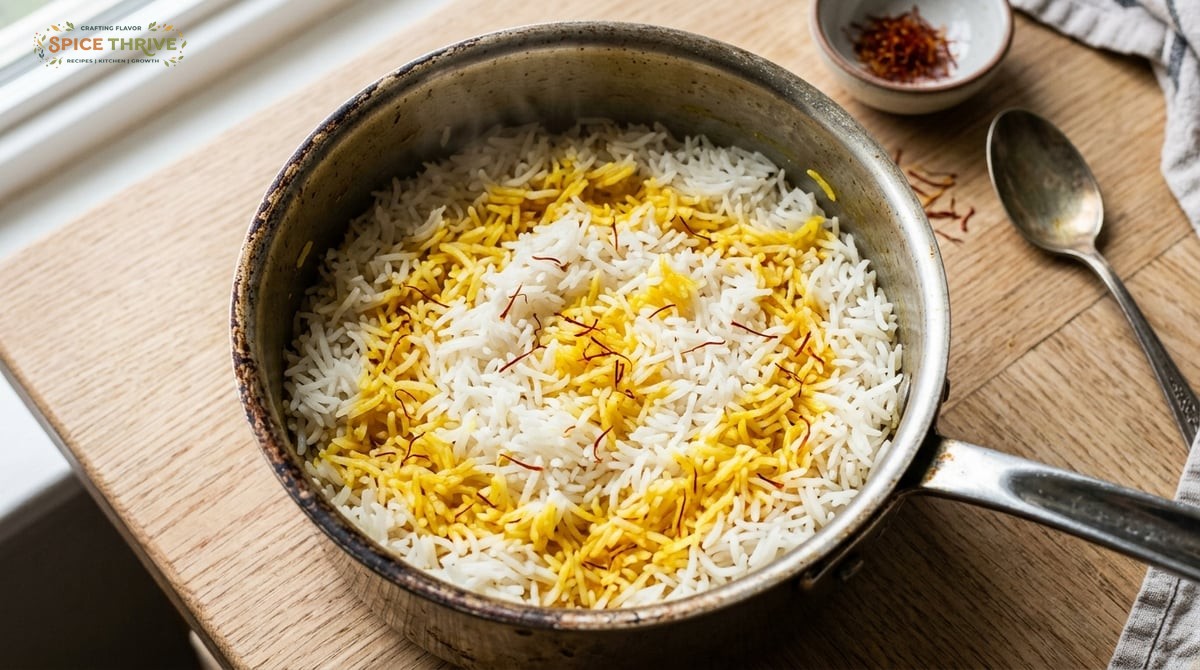
- Let It Steam: Cook, undisturbed, for 10 minutes. The water should be mostly absorbed—peek quickly if you must! Scatter the soaked saffron (threads and liquid) and butter (or olive oil) over the rice. Cover again. Reduce heat to the lowest possible setting. Steam 8-10 more minutes. While this second steaming finishes the cooking, it also allows the saffron’s aroma to rise through the pot, perfuming the rice from top to bottom. If you like crispy bits, at this stage increase the heat just for the last few minutes as described below.
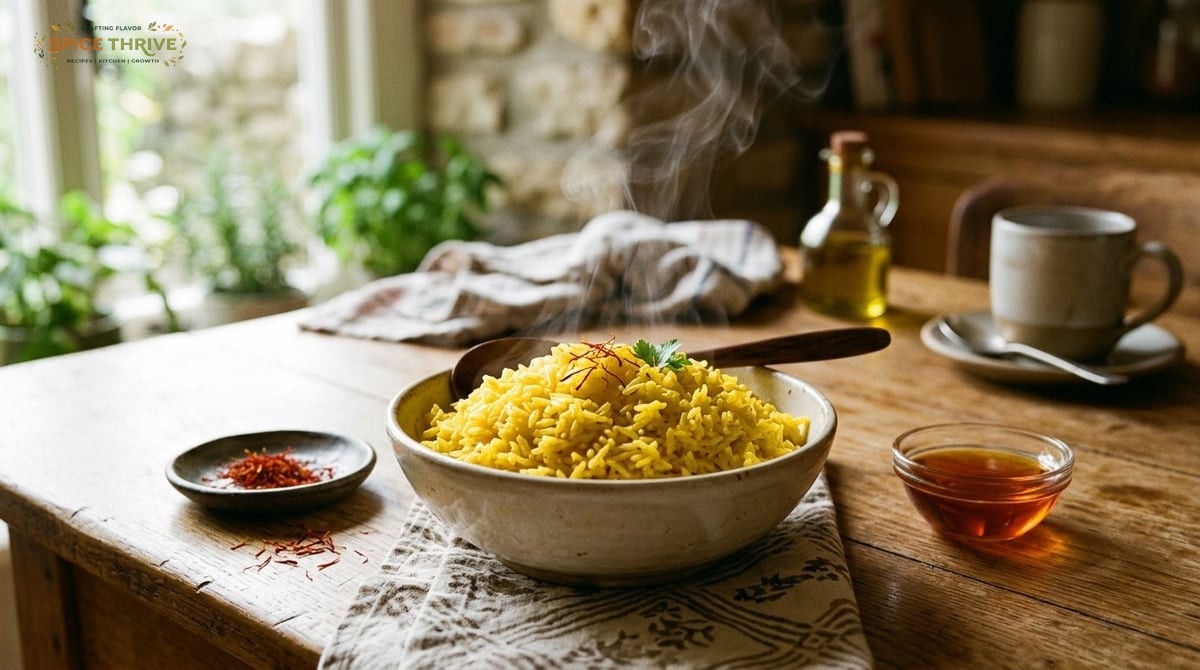
- Fluff and Serve: Turn off the heat. Let the pot sit (covered) for 5 minutes, then gently fluff the rice with a fork. The grains should be golden, fragrant, and beautifully separate. A wide, flat fork or rice paddle works best here—start at the edges, gently lifting and separating. Serve immediately for best texture. For parties, transfer to a serving platter and garnish with a few extra saffron threads, chopped herbs, or lemon zest.
Check out photos below: notice the color change after adding saffron, and the way the grains lift as you fluff.
Pro Tips & Troubleshooting From My Kitchen
- Don’t skip the soak! Rinsing and soaking the rice really helps each grain cook up fluffy, not sticky. Even if you’re in a hurry, a 10-minute soak is better than none at all. For the fluffiest results, let rice soak for up to 30 minutes if you have time (especially for aged basmati).
- Keep the heat gentle: My first try simmered too hard, leading to mush and burnt bits on the bottom. Keep it low for gentle steaming. If your heat is too strong, the water may evaporate before the rice is cooked through, causing uneven texture. Use the smallest burner you have or a flame tamer if your stovetop runs hot. Remember: patience here pays off!
- Saffron can be subtle or strong—taste as you go: The longer it steeps, the deeper the flavor. Adjust to your liking. If you love bold flavor, increase steeping time up to 20 minutes, or crush the threads as mentioned above. For lighter color, use less saffron or steep for just 5 minutes. Always add saffron near the end of cooking for a more intense yellow on top.
- If your rice is still hard after steaming, sprinkle with 1–2 tablespoons more hot water, cover, and let steam a few more minutes. This can help coax stubborn grains to tenderness without risking a sticky pot. If you check and see raw rice at the surface after the first simmer, don’t worry—just add a splash more water and keep the lid on tight.
- Golden bottom (tahdig): On my third test, I cranked the heat at the end for 2–3 minutes for a crispy golden crust. Worth it if you love texture! For a more authentic Persian-style tahdig, add a tablespoon of oil and a splash of water to the pan before layering the rice. Tip upside down to serve for a dramatic crunch.
Variations and Dietary Swaps
- Dairy Free/Vegan: Use olive oil or vegan butter instead of dairy butter. Some cooks enjoy coconut oil for a tropical note, but keep in mind it will alter the flavor slightly.
- Enhanced Aromatics: Saute onions and garlic in the pot before adding rice and water for a savory undertone. Dice half a yellow onion and cook until translucent, then add a clove of minced garlic—this builds a flavor base reminiscent of pilaf, making the rice even more satisfying as a standalone dish.
- Persian-Style Tahdig: For a crispy crust, drizzle oil in the pan before adding rice. Cook uncovered on medium-low 5–8 minutes at the end. You can also lay thin potato slices under the rice before cooking for a crunchy potato tahdig, as done in many Iranian homes.
- Pilaf Add-ins: Toss in toasted almonds, pistachios, raisins, or barberries for little pops of flavor and color. Barberries are tart Persian berries found at Middle Eastern stores; they’re soaked in water and briefly fried in butter or oil before folding in. Chopped dried apricots, currants, or slivered carrots are also classic for extra sweetness and color.
- Swap the Rice: Jasmine, Texmati, or regular long-grain rice can all work—you’ll just get a different aroma and slightly different texture. Japanese short-grain rice works less well due to its high starch content, but can be used for a stickier comfort-food version popular in Southeast Asia.
This is a flexible base—try it with a chickpea curry, a saucy cauliflower korma, or as a showy side to grilled lamb kebabs or baked tofu. In Iran and Azerbaijan, saffron rice accompanies slow-braised stews and grilled meats. In the Mediterranean, it stands up to seafood and roasted peppers. For a Spanish twist, serve alongside a rustic seafood paella. The variations truly are endless.
Storage, Reheating, and Make-Ahead Tips
- Refrigerator: Cool the rice quickly, then store in an airtight container up to 5 days. Saffron’s flavor deepens over time! Some prefer the leftovers even more, as the fragrance continues to meld with the rice. Keep containers well-sealed to prevent absorbing other odors.
- Freezer: Portion into freezer bags, press flat, and freeze up to 1 month. Thaw overnight in the fridge for best texture. When reheated, the grains remain surprisingly fluffy if you break up clumps before heating. Label bags with date and portion size for easy meals later.
- Reheating: For best results, splash a spoonful of water over the rice and gently heat (covered) on the stovetop or microwave until steaming hot. Fluff before serving. To refresh the aroma, you can add a drop or two of saffron water if desired. If using the stovetop, low heat prevents the bottom from drying out or scorching.
- Make-Ahead: You can prepare up to the step just before adding the saffron and butter/olive oil. Finish with the last steam right before serving for freshest color and aroma. This is helpful for dinner parties: the base rice can be held warm (even in a rice cooker set to “keep warm”), then finished with saffron and fat at the last minute.
Printable Recipe Card: Rice and Saffron Recipe
Rice and Saffron Recipe (Tested & Proven)
- Prep time: 15 minutes
- Cook time: 25 minutes
- Total time: 40 minutes
- Yield: 4 servings
Ingredients
- 1 1/2 cups (285g) basmati rice
- 1/2 teaspoon saffron threads
- 2 1/4 cups (540ml) boiling water
- 1 1/2 teaspoons (9g) salt
- 2 tablespoons (28g) butter or olive oil
- Optional: 1 bay leaf or cinnamon stick, lemon juice to serve
Instructions
- Soak saffron in 3 tablespoons (45ml) hot water 10 minutes.
- Wash rice until water is almost clear. Soak 15–20 minutes, then drain.
- Bring water and salt to a boil with any aromatics. Stir in drained rice, cover, and reduce to simmer 10 minutes.
- Add saffron (liquid + threads) and butter or oil. Cover, lower heat, steam 8–10 minutes.
- Let stand 5 minutes. Fluff gently with a fork before serving.
Nutrition estimate (per serving): 245 cal, 4g protein, 42g carbohydrate, 6g fat, 0mg cholesterol (using olive oil). Gluten free, vegetarian, vegan option, dairy present if using butter. No nuts, egg, or soy.
Updated: June 2024 — Retested for clarity and consistency. For step photos and tips, see the main article above.
Recipe by: Maya Lin, Spice Thrive founder & obsessive recipe-tester
Bring Fragrant Rice and Saffron to Your Table Tonight
There’s something joyful about lifting the lid to find fluffy golden rice, rich with the gentle aroma of saffron. I hope this guide makes it feel totally achievable (and a little bit magical) for you, too. If you give this recipe a try, share your experience or post a photo—nothing beats seeing your comfort classics at your table. For more globally-inspired comfort dishes, check out my Chickpea Curry, Roasted Cauliflower, or Spiced Rice Pilaf next! Happy cooking from my kitchen to yours.
Rice & Saffron Recipe: Common Questions
How much saffron should I use for subtle flavor?
For a gentler touch, use 1/4 teaspoon saffron threads or steep for just 5 minutes before adding.
Can I double this recipe?
Yes. Just use a larger pot and increase water and seasonings proportionally, but don’t double the saffron—1 teaspoon is enough for most family pots.
What if my rice comes out sticky?
Check: Did you soak and rinse? If yes, it may be too much water or over-stirring. Next time, use scant water and let the rice rest, covered, before fluffing.
Is saffron safe for kids or allergies?
Saffron is generally safe in culinary amounts, but avoid if you have a known allergy. No nuts or gluten present; dairy only if using butter.
Can I use ground saffron instead of threads?
Ground saffron works, but use half as much. Dissolve it in hot water just as you would the threads.
What mains go best with rice and saffron?
Try it with grilled meats, tagines, curries, or roasted veggies. The gentle flavor fits hearty or light dishes alike.
This article was created with the help of AI. Images may also be AI-generated.