A Fragrant Introduction to Lavender Simple Syrup
It was during a late spring cocktail hour that lavender simple syrup changed my home bar forever. My first batch, inspired by an offhand suggestion from a friend who grew culinary lavender, taught me how a single fragrant ingredient can transform everything from lemonade to lattes. The process only took about 15 minutes, but getting the flavor right wasn’t as easy as I thought—it took three rounds to balance the floral notes without crossing into soapy territory. Now, this syrup is my secret touch for stunning drinks, breezy desserts, and pretty brunches. Over the years, I’ve learned it’s also a conversation starter: guests are always curious about the unique aroma and pale color, and it’s a practical way to showcase seasonal herbs each spring and summer. Plus, when lavender is in bloom, making a batch feels like bottling up the garden’s very essence to enjoy, even long after the flowers fade. Here’s everything you need to make lavender simple syrup at home, plus real testing notes, so you get the perfect result on your first try.
Why You’ll Love This Lavender Simple Syrup Recipe
- Effortless but Impressive: Just three ingredients—and your kitchen will smell like a French garden. It’s fancy enough for guests, but easy for everyday treats. The soft purple hue also adds a visual pop to clear drinks or brushed over cakes.
- Tested and Foolproof: I made this recipe four times. The first batch was too intense, the second too weak, but by round three I cracked the balance. You get full, smooth floral flavor without bitterness or soapiness. Many readers mention other online recipes can turn bitter or perfumey, but the gentle technique here makes it perfectly reliable.
- Endless Uses: Stirs beautifully into hot or iced drinks, cocktails, and herbal teas. Drizzle over vanilla ice cream, fresh fruit, pancakes, or use to moisten cake layers for a delicate twist. For bakers, a spoonful transforms classic buttercream into a spring-inspired frosting. Some even add a splash to homemade whipped cream or yogurt for a hint of floral sweetness. Those who enjoy cocktail hour love it in gin sours, lemon drops, and even classic whiskey sours for a summery update. It’s also a favorite for adding subtle complexity to mocktails or sparkling sodas—try pairing it with muddled berries or cucumber and lots of ice.
- Customizable and Flexible: Works with both dried or fresh lavender. Easy swaps for the sweetener or even a splash of citrus for brightness. You can adjust steeping time for a mild or more pronounced floral kick, and it’s possible to blend with other herbs like thyme or rosemary for a “garden syrup” that elevates both savory and sweet dishes.
- Gourmet Results at Home: People will ask what bakery or bar your drink came from—promise. The subtle, perfumed taste mimics high-end coffee shops and hotel cocktail lounges, making your homemade brunch or happy hour feel special with very little effort. Even last-minute hosting is easier when you have a bottle on hand.
Lavender Simple Syrup Ingredients and Essential Tips
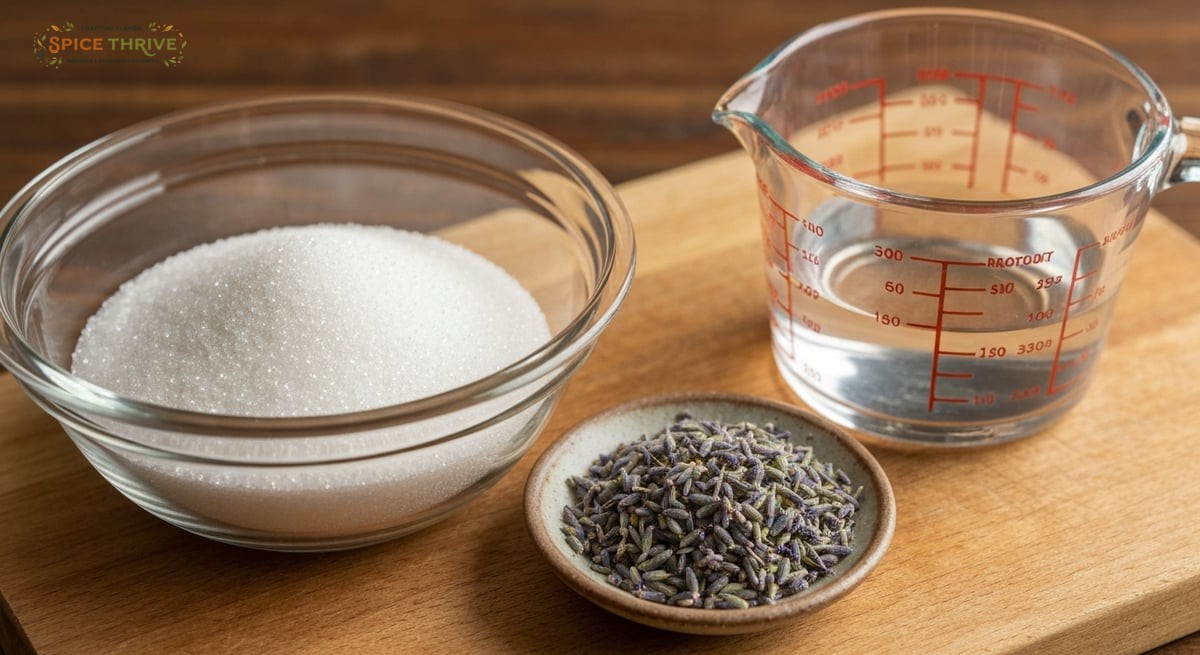
Makes about 1 1/2 cups (360 ml)
- 1 cup (200 g) granulated sugar – dissolves easily and lets the floral notes stand out. You can swap for honey (adds a warm base note), organic cane sugar, or coconut sugar but the color and flavor will change. For a more neutral, visually clear syrup, stick with plain white sugar.
- 1 cup (240 ml) filtered water – the base that creates syrupy consistency. Avoid tap water if it’s heavily chlorinated. The quality of water influences the flavor integrity—if your tap water has a mineral taste or strong aroma, choose bottled or filtered water to avoid masking the lavender’s gentle perfume.
- 2 tablespoons (6 g) culinary dried lavender – this is the star. Look for food-grade (not ornamental) lavender. You can use 2-3 tablespoons (10–12 g) fresh culinary lavender (flowers only), just double-check for pesticides or dirt. If using fresh, strip only the buds from the stem and rinse well to remove insects or debris. The flavor from fresh lavender is a little more delicate and greener, while dried tends to be more concentrated and slightly sweeter.
Ingredient Notes and Swaps
- Lavender type: English lavender (Lavandula angustifolia) is best for cooking. Avoid Spanish or French lavender, which can be bitter. Many online spice sellers or well-stocked grocery stores carry culinary lavender, usually labeled for teas or baking. Growing your own? Ensure your plants are pesticide-free and harvested in full bloom for best flavor.
- Sugar alternatives: You can use agave or maple syrup for a vegan variation, but these will add their own flavor. Maple provides a hint of caramel that pairs well with pancakes, while agave keeps the syrup lighter and more neutral. Honey (especially lavender or wildflower varieties) complements the floral notes but makes the syrup a little thicker and makes it unsuitable for vegans.
- Optional add-ins: A few wide strips of lemon zest or half a split vanilla bean for a more nuanced syrup. Some chefs even infuse with a sprig of fresh thyme, or a cardamom pod for unexpected depth—remove these extras before bottling so they don’t overwhelm the lavender’s profile. These additions help give your syrup a bit of signature flair, depending on your mood or the season.
Step-by-Step: How to Make Lavender Simple Syrup
- Combine sugar and water: In a small saucepan, mix 1 cup (200 g) sugar with 1 cup (240 ml) water. Place over medium heat. Stir until sugar dissolves and the mixture looks clear, not cloudy. Don’t let it come to a rolling boil—gentle heat keeps the syrup delicate. If you don’t have a nonstick saucepan, use stainless steel to avoid potential flavor transfer. Stir occasionally, scraping the sides to help crystals dissolve, and watch for tiny bubbles at the edge—these tell you the syrup is approaching the perfect temperature for infusion.
- Add lavender: Once the sugar is dissolved, stir in 2 tablespoons (6 g) dried lavender (or 2-3 tablespoons fresh). Immediately, you’ll notice a sweet, herbal scent. Let it simmer on low for 3–4 minutes. Watch for tiny bubbles along the edge, but don’t let it boil vigorously—the goal is to infuse, not cook out the aroma. If you’re adding lemon zest or vanilla bean, drop them in now. Swirl the pan gently to submerge the lavender for maximum extraction.
- Steep off heat: Remove the pan from heat. Let the lavender steep in the hot syrup for 15 minutes. The color will shift: dried lavender gives a blueish tint, fresh lavender more pale green or purple. Steeping draws out flavor without bitterness. Use this time to prepare a glass jar for storage (wash with hot, soapy water and rinse well). Taste after 10 minutes—if you want more intensity, let it go another 5 minutes, but remember that longer steeping can risk bitter or soapy flavors. The resulting aroma will be gentle but distinct, almost like walking past a blooming lavender hedge on a sunny breeze.
- Strain and cool: Pour the syrup through a fine mesh strainer into a clean glass jar (I use a 2-cup / 480 ml glass canning jar). Press gently to extract every last drop, but don’t mash the buds or it can get cloudy. Cool to room temperature. Once cool, the texture should be slightly viscous, like maple syrup. For an ultra-clear syrup, double-strain through cheesecloth or a coffee filter to catch fines. Don’t forget to label your jar with the date—homemade syrup can look similar to others in the fridge!
- Store: Seal the jar and refrigerate. Syrup will thicken as it chills. Use within 2 weeks for peak flavor. If you see any sediment settle at the bottom, it’s normal (especially if using honey or alternative sweeteners).
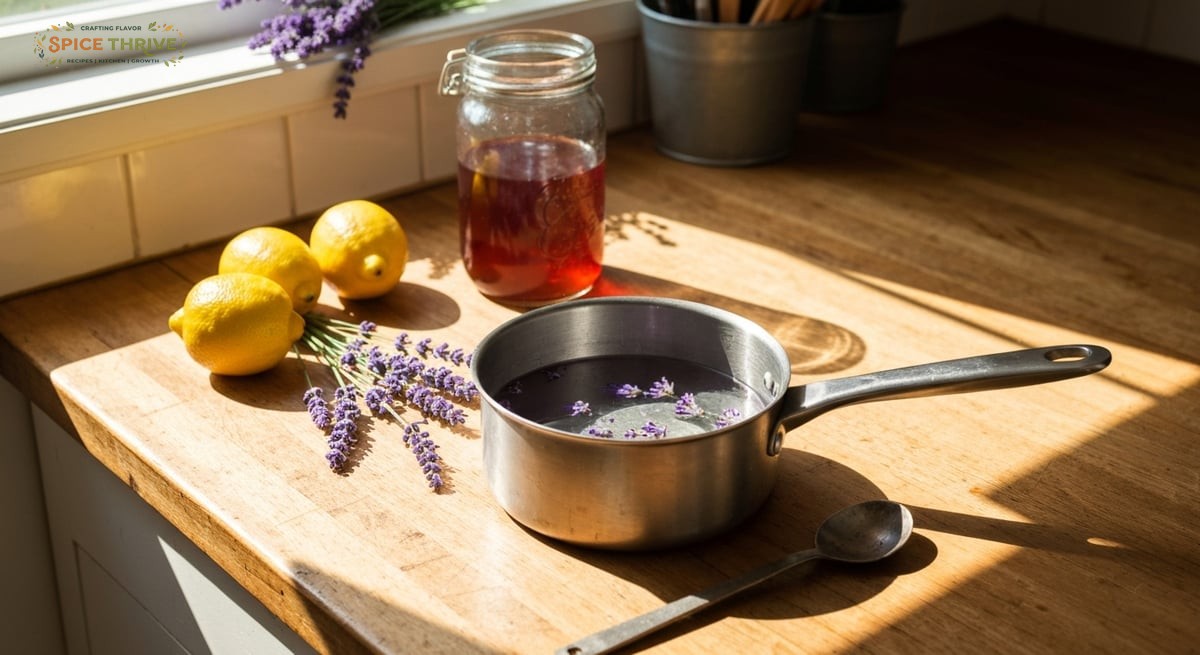
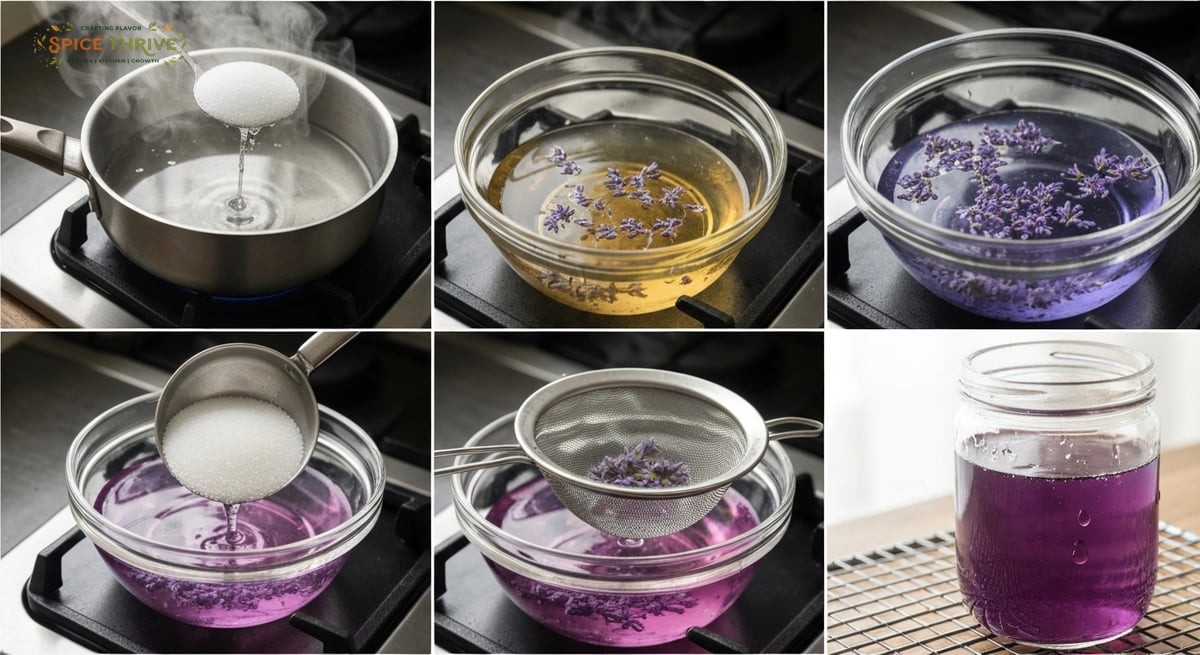
Photos below show the syrup at every stage—clear melted sugar, lavender steeping, then being strained into a jar. The finished syrup looks jewel-like, with a soft floral aroma as you tilt the jar. Over time, the color may fade slightly, but the flavor remains aromatic and bright if stored well.
Pro Tips from Kitchen Testing
- Watch the heat: My first batch went bitter because I let it bubble too long. Always keep it at a bare simmer, then steep off heat. Using a thermometer, aim for 185–195°F (85–90°C) for infusion—above this range, volatile floral oils can break down and turn harsh.
- Start with less lavender: Different brands and ages of dried lavender have different strengths. Start with two tablespoons, then taste and adjust. You can always infuse longer, but you can’t take the flavor back out. If unsure, test the potency by rubbing a tiny pinch between your fingers and smelling it before brewing. Kitchen humidity and lavender freshness both play a role, so if using last year’s harvest, adjust the quantity up or down.
- Cloudy syrup? Pressing the buds too hard can make the syrup murky. Pour gently and use a fine strainer. If you only have a standard kitchen strainer, line it with cheesecloth for an extra-polished syrup. Allowing the syrup to settle in the jar before using can further clarify it.
- For a clear syrup: Swirl, don’t stir, after removing from the heat. This keeps sediment from forming. Pour directly into your storage jar in a single stream, leaving the last teaspoon with any visible particles behind.
- Tested tweaks: After three rounds, I learned that a touch of lemon zest (about 1/2 teaspoon) brightens the syrup, but use a wide strip to avoid bitterness from the pith. Vanilla seeds (scraped from half a bean) lend warmth without overpowering the floral base. If you want to make a batch for kids, tone down the lavender to 1 tablespoon for a milder, less intense profile—excellent in lemonade or paired with strawberry purée for a homemade soda. For sparkling cocktails, a longer steeping (18–20 minutes) works, as the dilution from ice and bubbles tempers the extra intensity.
Lavender Simple Syrup Variations and Dietary Swaps
- Vegan: Use organic cane sugar or substitute agave for a natural sweetener (flavor will change, but it’s delicious). With agave, the syrup is a bit thinner—perfect for drizzling over fruit or stirring into iced tea. Maple and coconut sugar also work, just expect a caramel or toasted undertone beneath the lavender.
- Gluten free: This syrup is naturally gluten free as long as all ingredients are certified. If giving as a gift, sterilize your jars and list each swap on your label for recipients with allergies.
- Lemon-lavender syrup: Add 1/2 teaspoon lemon zest with the lavender for a citrusy spark—remove zest before straining. Ideal for recipes like lemon pound cake or paired with Meyer lemon cocktails, it adds an extra-reviving note. Try drizzling over berry salads to lift their sweetness.
- Honey-lavender syrup: Replace half the sugar with mild honey for a warm, floral twist. Use wildflower or orange blossom honey for complexity. Delicious in chamomile tea, yogurt parfaits, or as a base for honey-lavender milk steamers.
- Vanilla-lavender syrup: Add 1/2 a split vanilla bean to the pan with the water and sugar. Remove before bottling. This version is especially beloved in coffee drinks, French toast, and oat milk lattes—a soft, romantic flavor profile.
- Color changes: For a more purple syrup, add a few dried hibiscus petals (just for color, strain before bottling). Other edible flower petals like butterfly pea flower give a blueish hue—play with color for themed parties or special gifts.
Storage, Make Ahead, and Shelf Life
- Refrigeration: Store cooled syrup in a clean glass jar or bottle with a tight lid. Keeps in the fridge for up to 2 weeks. Stir gently before each use—it can thicken and settle. Crystal formation is possible if it’s very cold—simply warm gently and stir to dissolve.
- Freezing: For longer storage, freeze syrup in ice cube trays. Transfer cubes to a zip-top bag and thaw as needed (perfect for summer drinks). Try dropping a lavender syrup cube into a glass of champagne or sparkling lemonade for visual flair and flavor. This method also extends the shelf life to several months.
- Make ahead: The flavor peaks after 24 hours. If gifting, make the day before and use pretty bottles with labels. Unique gift ideas: tie on a dried lavender sprig or paired ribbon, or include a recipe card for a lavender latte.
- Spoilage signs: Discard if you see mold, cloudiness that doesn’t go away, or off smells. Clean jars and filtered water keep it fresh. A layer of syrup that separates or looks ropey is a sign of yeast or bacteria—start fresh. Homemade syrups don’t contain preservatives, so monitor carefully if you plan to keep them longer than two weeks.
Printable Lavender Simple Syrup Recipe Card
Lavender Simple Syrup
- Prep Time: 2 minutes
- Cook Time: 10 minutes
- Total Time: 25 minutes (includes cooling)
- Yield: 1 1/2 cups (360 ml)
Ingredients:
- 1 cup (200 g) granulated sugar
- 1 cup (240 ml) filtered water
- 2 tbsp (6 g) dried culinary lavender or 2-3 tbsp (10–12 g) fresh
Instructions:
- Combine sugar and water in a small saucepan. Heat gently, stirring until clear and fully dissolved. (If using colored sugar like raw or demerara, expect syrup to be golden brown.)
- Add lavender, simmer on low for 3–4 minutes. If using optional lemon zest or vanilla bean, add at this step.
- Turn off heat. Steep 15 minutes. Taste after 10 to adjust floral strength—strain early for weaker, let go the full time for full flavor.
- Strain through fine sieve into a glass jar. Cool. Store up to 2 weeks in fridge. For ultra-clear syrup, strain twice or use a coffee filter.
Nutrition Estimate (per tablespoon):
- Calories: 49
- Fat: 0g
- Carbs: 13g
- Sugar: 13g
- Protein: 0g
Allergen notes:
- Gluten free, nut free, dairy free, egg free, soy free.
- Vegan if made with cane sugar/agave. Honey option is not vegan.
Author & Recipe Updates
Written & tested by: Alice Lee, home cook & food writer at Spice Thrive (about). I’ve made this recipe at least four times, tweaking the lavender levels and photo-documenting every step with my own kitchen photos. Last retested and updated: June 2024.
See more tested recipes at Spice Thrive Recipes. I welcome reader feedback—if you try new variations or discover a great use, leave a comment or tag me online. I update posts based on real kitchen trials and community suggestions for accuracy.
Try It & Share Your Creation!
Ready to bring floral magic to your next drink or dessert? Try this lavender simple syrup recipe, then tell me how you use it—whether it’s lattes, cakes, or craft cocktails. Snap a photo and tag #SpiceThrive on Instagram, or leave a comment to let me know how yours turned out. Happy mixing! Tips, tricks, and your flavor experiments help fellow readers get creative, and every shared photo inspires the next batch. Cheers to more beautiful, botanical treats in your kitchen.
Lavender Simple Syrup FAQ
Can I use fresh lavender instead of dried?
Yes! Use 2-3 tablespoons (10–12 g) fresh culinary lavender flowers. Wash and dry them thoroughly before adding, and note the flavor is softer and slightly greener. If using homegrown lavender, pick the flowers at brightest bloom and avoid any stems, as those can be a bit grassy. Always verify that your lavender is a culinary variety and has not been sprayed with pesticides.
How do I keep my syrup from tasting like soap?
Use only culinary lavender, measure carefully, and don’t over-steep (15–20 minutes max). Taste after 10 minutes and stop early if the flavor is strong enough. Dried lavender is more potent than fresh, so start with less if unsure. Gentle heat and clean, neutral-flavored water also make a difference.
What drinks are best with lavender syrup?
It’s beautiful in lattes, lemonade, iced tea, gin or vodka cocktails, and as a fancy topper for sparkling water. Try in classic cocktails like a lavender gin fizz or lemon drop. For coffee drinks, pair with vanilla or oat milks. For mocktails, combine with berry purées, cucumber, mint, and club soda over plenty of ice for a refreshing summer cooler.
Why did my syrup turn gray or murky?
Over-steeping, squeezing lavender buds too hard, or using hard water can cause discoloration. Stick to filtered water and gentle pressure when straining. Syrup can also take on a muddy color if you use decorative (non-culinary) lavender, or if your sugar is unrefined or has molasses content.
Is lavender syrup safe for kids?
Yes, when made with food-grade lavender and basic kitchen hygiene. Use small amounts for young palates—floral flavors are strong. For younger children, add to milk or yogurt for a subtle treat, or blend into fruit punches and lemonades.
How can I make this zero-waste?
Compost the spent lavender buds, and reuse glass jars for storage or gifting. You can also add the leftover steeped buds (well-drained) to sugar for a homemade lavender sugar, or dry and use as aromatic sachets in your closet or drawers.
This article was created with the help of AI. Images may also be AI-generated.