Perfectly Creamy Sous Vide Egg Bites (Tested, Photographed, Loved)
I still remember the first time I tried making sous vide egg bites. I wanted something as creamy and tender as my favorite café’s, but without any graininess or rubbery edges. My first batch? A little undercooked, and a bit runny in the center. After four batches, a notebook covered in sauce splatters, and lots of coffee, I finally landed on a recipe that comes out cloud-soft every time. These are now my staple for brunch with friends—loved by my toddler, scarfed down by my partner. The texture and mild, savory flavor have even converted friends who usually dislike eggs. What I also love: you can make a dozen at once, meaning you’re set for easy heat-and-eat breakfasts for days. Keep reading for the details, plus step-by-step photos from my own kitchen along the way. This method has become a reliable foundation for creative breakfasts in our house—sometimes I’ll customize each jar for guests or take requests from my family to suit everyone’s taste. My technique is the result of lots of small tweaks, so I’ll share not just the final recipe, but also the reasoning behind choices and techniques so your homemade egg bites can rival your favorite coffee shop’s every time.
Why You’ll Love This Sous Vide Egg Bites Recipe
- Next-level creaminess: Sous vide makes the eggs ultra silky, never rubbery or dry. Each bite melts in your mouth and holds together with a custardy texture you can’t get from oven baking. The low, even temperature of the sous vide bath prevents overcooking along the edges—so your first bite is as luscious as the last. Coffeehouse egg bites often sit out and become tough, but homemade sous vide versions stay tender for days.
- Straightforward prep: No fancy tools required except the sous vide itself. The rest is everyday pantry staples and a blender, plus small canning jars or silicone molds. Setup and cleanup are minimal, and the only real hands-on time is prepping the optional fillings. My favorite part is pouring the custard base into jars—it feels effortless, especially when you use a blender for smooth mixing.
- Highly customizable: Change up cheeses, add fresh herbs, toss in cooked veggies or ham—whatever you have in your fridge works beautifully here. Recent hits in my house have included sun-dried tomato and feta, sautéed mushrooms with Swiss, and even a caprese version with basil and a dab of pesto. These egg bites are a great way to repurpose small amounts of leftovers or odds and ends from the week.
- Make ahead & portable: Egg bites keep well in the fridge and taste just as good reheated, so they’re perfect for meal prep or busy weekday breakfasts. Grab one from the fridge, microwave, and go—no fuss. Kids like them as lunchbox protein (especially with a bit of salsa for dipping), and they’re sturdy enough for a snack on the go during busy days.
- Consistently delicious: After testing this recipe six times, I’m convinced—no more guessing or overcooking. The sous vide guarantees gentle, precise heat for dreamy eggs every time. Whether you like classic, veggie, or meat-filled versions, expect the same velvety result batch after batch.

Ingredients & Swaps: What You Need (And Why Each Matters)
- 4 large eggs (about 220g): The main protein—stick to 4 for ideal firmness. Eggs are the structure and create the custardy set. Using significantly more will give you a firmer, less creamy bite; fewer and you’ll risk a runny, unstable texture. Opt for good quality, fresh eggs for the best flavor and set.
- 1/2 cup (120g) cottage cheese: Makes the egg bites fluffy and light. Cottage cheese is my go-to for a pillowy interior and subtle tang. Swap for ricotta or thick Greek yogurt for slight variations in texture (ricotta brings a denser, richer result; Greek yogurt lends a faint tartness and extra protein). The small curds in cottage cheese disappear when blended, so texture stays ultra-smooth.
- 1/4 cup (60ml) cream: For richness and a soft, custard interior. Cream results in a delicate set and round mouthfeel, but if you prefer a slightly leaner version, whole milk works well—just expect a firmer bite. For non-dairy, full-fat coconut cream holds up best, giving subtle coconut flavor and lush consistency.
- 1/2 cup (60g) shredded cheese: Cheddar, Monterey Jack, gruyere, or Swiss all work. Choose sharper cheeses for tang, milder for smoothness. Cheese not only flavors but also adds melt and body—hard cheeses like parmesan should be paired with a melty cheese for best texture.
- 1/4 tsp salt + 1/8 tsp white pepper: Enhances the flavor. Black pepper is fine but specks will show in the finished bite. Add more salt if using low-sodium cheeses or fillings, but remember bacon, ham, and strong cheeses will increase saltiness.
- Optional add-ins: 1/2 cup cooked veggies (spinach, peppers, mushrooms), 1/4 cup diced ham or bacon, chopped herbs, or a dash of hot sauce. Make sure fillings are cooked and drained to avoid watery bites. Sauté veggies to develop flavor and evaporate excess moisture. Wilted spinach, caramelized onion, and roasted red peppers are top choices, but even small amounts of leftover hash browns, crumbled cooked sausage, or lamb can work.
Allergens: Eggs, dairy. See the variation section for swaps. Yield: 6 egg bites (using 4 oz/120ml jars). Ingredient choices influence set and flavor massively—so experiment with what you have, but keep eggs and dairy ratios close for best results. Don’t skip blending: it’s key for the smoothest bite.

Step-by-Step Instructions: Soft, Custardy Egg Bites
- Prep the sous vide: Fill a large pot or sous vide container with water and preheat your sous vide circulator to 172°F (78°C). This temperature gives a creamy, set texture every time. Use a thermometer to check accuracy if it’s your first time; an accurate temp is the main difference between solid or silky.
- Make the egg base: In a blender, combine eggs, cottage cheese, cream, shredded cheese, salt, and pepper. Blend on high until completely smooth and slightly frothy, about 20-30 seconds. You want no lumpiness—look for a pale yellow, silky liquid. If you have a high-speed blender, the result will be extra airy and delicate; if using an immersion blender, just be thorough and scrape down sides as needed. Be sure all cheese is fully incorporated, as unblended bits can lead to textural inconsistencies.
- Prepare jars or molds: Lightly grease six 4-ounce (120ml) mason jars or silicone molds. If using jars, do not over-tighten lids—just finger-tight so air can escape. Pour egg mixture evenly between jars, leaving about 1/4 inch space. Add any filling on top and use a fork to gently swirl through. For even results, use a ladle or spouted cup to distribute base evenly. If adding different fillings to each jar (for variety), swirl very lightly—overmixing can make the bites less attractive and disrupt the set.
- Seal and cook: Lower jars into the preheated water bath using tongs, making sure water covers at least 3/4 up the jar sides. Cook for 55 to 60 minutes. The eggs should look just set on top, with a tiny wobble in the center. Uneven water levels can cause jars at the surface to cook slower, so add more water if needed. During testing, I found that 55 minutes produced egg bites with a faintly custardy center, while 60 minutes gave a firmer (yet still velvety) set—test your preferred timing the first round. If you see condensation inside the jar lid at the end, that’s normal.
- Finish and serve: Let jars cool for a few minutes before removing. Run a knife around the edge to release, or eat straight from the jar. Serve warm! If storing, let cool to room temperature before refrigerating. Egg bites can be enjoyed directly from the fridge or quickly reheated (see storage tips). When turning out, a silicone spatula or thin offset spatula helps preserve shape.
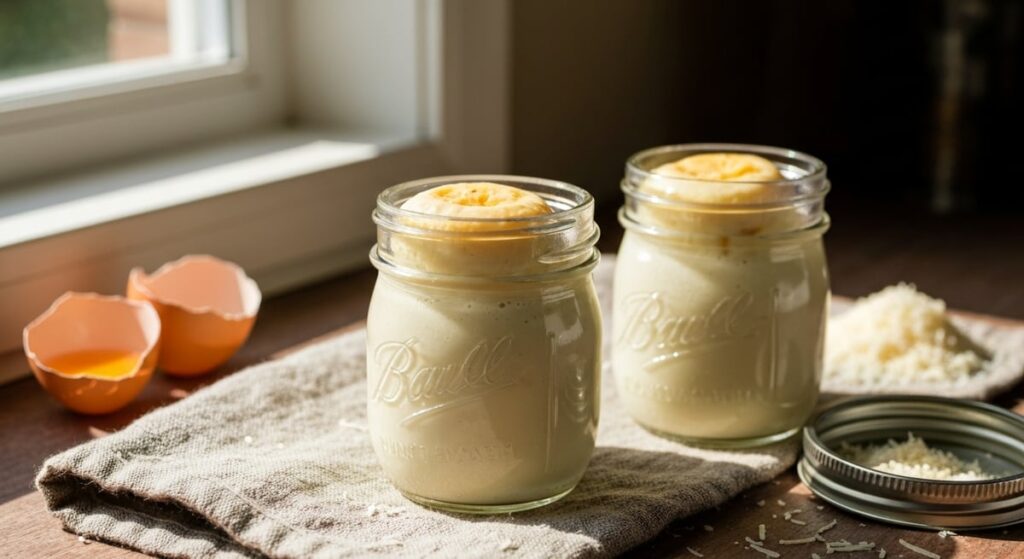
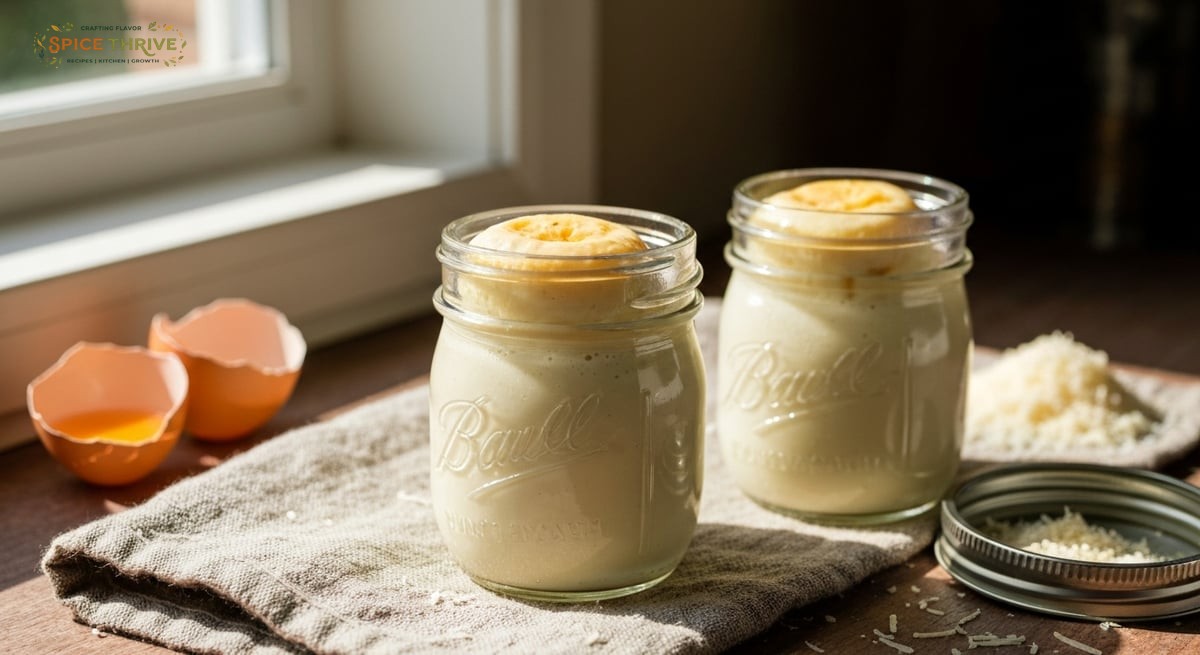
Below: My own in-process photos of the eggs before and after sous vide, plus the finished bites plated with chives and pepper. Watching the transformation is always rewarding; seeing the unset mixture change to a delicate, uniform texture is a sign you got every step right. Guests are always impressed—you can garnish with extra cheese, herbs, or a dollop of pesto for flair.
Pro Tips from Testing (And What to Avoid)
- Don’t underfill or overfill jars: Leaving a bit of headspace helps egg bites set perfectly and release easily later. Too much mixture can overflow in the water, too little may overcook and pull away from the sides. Visual cues like a slight gap below the rim go a long way for even cooking.
- Emulsify fully in the blender: Stop to scrape the sides and blend again so cheese and cottage cheese don’t settle out. If you see flecks or bits, blend an additional 10 seconds. Properly emulsified batter leads to the signature cloud-like result; the difference is dramatic compared to whisking by hand.
- Don’t over-tighten the lids: This was my biggest error in my second test—too-tight lids mean trapped air, which can cause jars to pop or bites to be uneven. You want enough looseness for air to vent, but not so loose that water leaks in. A gentle twist—tight enough you can unscrew easily with dry hands—is perfect.
- Use room temperature ingredients: Cold ingredients won’t blend smoothly, and the sous vide will take longer to cook everything through evenly. Allow eggs, cheese, and cream to sit out for 15-20 minutes before blending—this aids the smoothest blend and boosts flavor extraction.
- Skip uncooked fillings: Raw veggies release too much liquid and can make egg bites watery or spongy. Always cook and drain. Even sautéed mushrooms benefit from being pressed with paper towel to wick moisture before adding to jars.
- Release air bubbles: After pouring the mixture, tap jars gently on the counter to release air for a smoother bite surface. Any bubbles in the custard can leave pockmarks—if you have a torch, a brief pass over the surface will pop persistent bubbles (just like crème brûlée).
I tested six batches to get this just right—the first was undercooked, then I tried tweaking the cooking time. If your bites come out watery, try draining your veggies more or increasing cook time by 5 minutes. If too dense, dial back the cream a touch. Also, if you notice rubbery edges, your jars may have been sitting too near the surface or water level was low; keep everything submerged for best results. Don’t skip the cooling step—it helps the structure hold when you unmold or store. Once you’ve dialed in technique, sous vide egg bites can become a weekly ritual, and they’re endlessly adaptable for dietary needs or seasonal flavors.
Variations and Dietary Swaps
- Dairy-Free: Use coconut cream instead of dairy cream, unsweetened soy yogurt or a vegan cream cheese in place of cottage cheese, and plant-based cheddar for the cheese. Popular combos for vegan/dairy-free versions include chopped cooked bell pepper, chives, and vegan mozzarella. Silken tofu (blended well) can also be a partial stand-in to boost creaminess without dairy.
- Vegetarian: Simply skip the ham or bacon and load up on herbs or vegetables. Ideas: crumbled cooked veggie sausage, sautéed kale, or oven-roasted tomatoes offer flavor and substance.
- Loaded Veggie: Chopped spinach, sautéed mushrooms, and roasted peppers work beautifully. Squeeze any excess liquid out after cooking. Zucchini (seared and drained) is another popular filling. For a southwest vibe, combine black beans (rinsed and well drained), chevre, and a sprinkle of smoked paprika.
- Asian-Inspired: Add a dash of soy sauce instead of salt, stir in a touch of sesame oil, and top with sliced scallions before serving. Try with diced cooked shiitake mushrooms or bok choy. Incorporate a spoonful of miso or some chili crisp for subtle umami and spice.
- French Café Style: Swap in gruyere and a pinch of nutmeg, use chopped spinach and leeks for a classic flavor. Fresh tarragon or chervil finishes this twist elegantly—try serving with a dab of mustard on the side for true Parisian flair.
- Lower Fat: Swap cottage cheese for 0% Greek yogurt and use milk instead of cream. For those watching cholesterol, egg whites (about 8 for 4 whole eggs) can substitute, though texture will be less rich—compensate with extra flavor from herbs or spices.
- Make it spicy: Add a pinch of smoked paprika, or swirl in a few drops of sriracha before sealing jars. Other hits: diced pickled jalapeños for zing, or harissa for a North African note.
Always check mix-ins for hidden allergens, especially with dairy substitutes and processed cheeses. For family cooking, customizing each jar/mold with different fillings can satisfy varied tastes and dietary needs. Get creative—the gentle sous vide technique is very forgiving for swaps and flavor experiments!
Storage, Reheating, and Make Ahead Tips
- Refrigerate: Let egg bites cool fully, then refrigerate in jars for up to 5 days. They hold texture and flavor perfectly. Store with lids loosely screwed to prevent condensation, or wrap with plastic for extra freshness.
- Freezer: Freeze cooked egg bites (out of jars) wrapped well for up to 2 months. Thaw overnight in the fridge. To avoid freezer burn, wrap each bite in parchment paper and then in foil or store in an airtight container.
- Reheating: Microwave for 30-40 seconds right from the fridge, or gently steam for the same barely-set texture. For best results after freezing, steam or heat in a low oven covered with foil for 10-15 minutes at 300°F (150°C).
- Make ahead: Prep egg mixture and fillings up to two days ahead. Fill jars and refrigerate, then cook when ready. The uncooked base is stable in the fridge, so prepping the night before is an option for busy mornings—just give a stir before pouring into jars.
- Packed lunches: Pop cooled egg bites out and tuck in a container for a protein-rich lunch or snack on the go. They pair well with cut veggies, crackers, or a small salad for a complete meal. My son loves them in his bento box with cherry tomatoes and grapes!
If egg bites become watery after storing, blot lightly with a paper towel before reheating. For extended storage, keep bites separated by layers of parchment, which helps avoid sticking. Label jars or containers with date and flavor mix-ins for easy grab-and-go mornings.
Ready to Try It? Let Me Know!
If you make these sous vide egg bites at home, I’d love to hear how they turn out and what flavor twists you create. Share your results and questions in the comments, tag me on Instagram with #SpiceThriveEggBites, or check out my other brunch and vegetarian recipes here on Spice Thrive. Want more foolproof, restaurant-worthy breakfasts? Subscribe for email updates and never miss a new recipe. Happy cooking!
Recipe by Alex Wang, home cook, tested March and May 2024. Updated June 2024. See About Spice Thrive.
Common Questions About Sous Vide Egg Bites
Can I make these without a sous vide machine?
The unique custard texture truly relies on sous vide, but you can try a very low oven with a water bath (steam bake) in a pinch. The result will be a bit firmer. For oven-steamed bites, set your oven to 300°F (150°C), place filled molds or jars in a roasting pan, and pour hot water to come halfway up the sides. Cover the pan loosely with foil and bake for about 30-35 minutes. They’ll be less silky but still tasty.
Can I use silicone egg bite molds instead of jars?
Absolutely! Seal them tightly with foil and anchor with a heat-safe plate so they don’t tip in the water. Cooking time may be 5 minutes less. Silicone molds make unmolding even easier—just cool slightly and pop out. Check they are rated heat-safe to at least 180°C/356°F before using.
How do I prevent jars from floating in the sous vide?
If jars are floating, they’re overfilled or contain air bubbles. Leave 1/4 inch headspace, tap out bubbles, and weigh down if needed with a rack or spoon. Sometimes tying the jars together with kitchen twine or placing a small metal trivet on top can help keep them fully submerged during cooking for perfectly shaped bites.
Do you need to grease the jars?
Yes, a light spritz or rub with oil helps egg bites slide out, especially important for less fatty cheeses or lower cream recipes. This also assists if you freeze the bites and want to pop them out with zero sticking—olive oil, butter, or nonstick spray are all effective.
What kind of cheese tastes best?
Sharp cheddar or gruyere offer the most flavor. Monterey Jack or fontina melt beautifully for a milder bite. If you like a smoky undertone, try smoked gouda, or for an herby twist, stir in some crumbled boursin. Try blending two cheeses for a flavor boost and creamy consistency.
Are these gluten free?
Yes! With no wheat ingredients, and provided you check mix-ins, this recipe is gluten free as written. Still verify flavored cheeses and processed meats to ensure they’re gluten-free, as ingredients can vary.
This article was created with the help of AI. Images may also be AI-generated.