A Prime Rib That Changed My Holiday Table
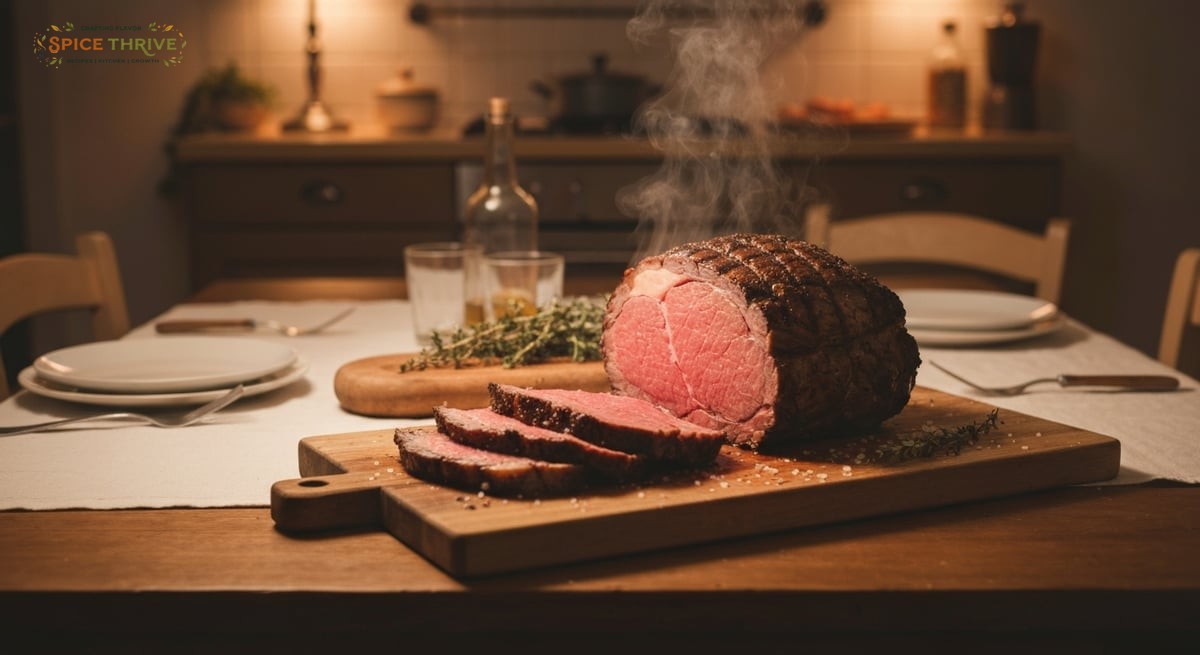
Three years ago, my brother brought a thick, beautifully marbled prime rib for Christmas dinner. We both wanted that steakhouse pink center edge-to-edge but always ended up with an overdone ring and a rare middle. That year, I tried sous vide for the first time, sealing the seasoned roast and letting it slowly bathe for hours. I’ll never forget the moment we sliced into it: every bite was juicy, rosy, and impossibly tender. Since then, I’ve tested this recipe seven times, tweaking the crust, changing timing, even fussing over spice blends. The result is now our family’s gold standard, and I promise, sous vide takes all the stress out of prime rib. Whether it’s your first roast or your fiftieth, you can do this—crusty, beefy, perfectly tender prime rib, every single time.
Why This Sous Vide Prime Rib Works
- Perfect doneness, every slice: Sous vide keeps the entire roast at the exact temperature you want, so there’s no gray outer ring and every bite is tender and juicy. This precision is nearly impossible with traditional oven roasting, which relies on carryover heat and can lead to unpredictable results. Even if your roast is an awkward shape or uneven thickness, sous vide ensures the same gentle doneness throughout.
- Stress-free for gatherings: The long water bath means you don’t need to hover over the oven or panic about timing. Prime rib waits for you, not the other way around. In fact, I’ve finished errands, welcomed guests, and handled side dishes without worry because the roast just stays perfectly hot and ready until serving time.
- Restaurant crust at home: My method finishes the roast with a high-heat sear, giving you that crackling, beefy bark without overcooking the inside. If you’ve ever envied the deep, savory crust from top steakhouses, this technique matches or even surpasses them thanks to the control you get with the stovetop and butter baste.
- Foolproof—even for beginners: I made plenty of mistakes developing this, and I’ve built those learnings into every step. You’ll get clear signs for doneness, texture, and seasoning. The sous vide technique is forgiving—if you leave the roast in for an extra hour, you won’t ruin it—making it ideal for cooks building confidence with big-ticket roasts.
- Make ahead ease: You can cook the roast ahead of time, chill it in the bag, and finish with a quick sear right before serving for absolute flexibility. This means you aren’t stuck in the kitchen while guests arrive, and you can serve restaurant-quality beef whenever the mood—and the schedule—strikes.
Ingredients and Substitutions: What Makes This Prime Rib Shine
- Bone-in Prime Rib Roast: 1 whole roast (4-8 lbs; 1.8–3.6 kg). The bone adds flavor and drama. Boneless works too but needs less cook time. If you want the show-stopping centerpiece with big, frenched bones, leave them attached and carve along them for presentation. Local butchers can help you select “first cut” (loin end) roasts, which are more uniform and easier to cook evenly.
- Kosher Salt: 2 ½ tbsp (37g) ensures deep seasoning. Sea salt is also fine. Avoid table salt (it can taste tinny). Don’t skip the pre-seasoning: the salt penetrates as the roast sits, helping draw flavors inward and boosting juiciness. For a dry-brine, season the roast the night before and refrigerate uncovered for a more flavorful, drier exterior that sears better.
- Freshly Ground Black Pepper: 2 tbsp (15g) for a warming bite. Pre-ground is okay in a pinch but loses punch. For maximum aroma, crack whole peppercorns with a mortar and pestle or spice grinder just before using.
- Garlic Cloves, Crushed: 6 large (about 30g), or 1½ tbsp dried granulated. Adds aromatic base flavor. Rubbing fresh, smashed garlic directly onto the meat infuses each bite; you can tuck some under fat caps or between bones for even more presence.
- Fresh Rosemary & Thyme: 3-4 sprigs each. Sub dried: 2 tsp (2g) each. For bright, savory perfume. These classic herbs stand up to long cooking, with rosemary’s piney notes and thyme’s warmth complimenting rich beef. If using dried, crush in your palm to release oils before adding to the rub.
- Olive Oil or Neutral Oil: 3 tbsp (45ml), divided. Helps herbs adhere and aids searing. High-smoke-point oils (like avocado or grapeseed) are especially good for the final sear since they won’t burn as easily as olive oil.
- Optional: Butter: 2 tbsp (28g), for basting during final sear. Adds richness and caramel notes. For a slightly nutty flavor, brown the butter gently first, then spoon over during searing to create true steakhouse flavor.
- Ingredient swaps: For a spicy twist, swap half the black pepper for Szechuan peppercorn. Rosemary can be replaced by sage. Try smoked salt or add crushed mustard seed for depth. You might also experiment with a hint of fennel seed or even a teaspoon of espresso powder for added complexity.
Allergen notes: Recipe is naturally gluten-free and dairy-free (skip butter for DF, or use vegan butter). No nuts or soy unless added by ingredient swap.
Step-by-Step Instructions: From Water Bath to Crusty Finish
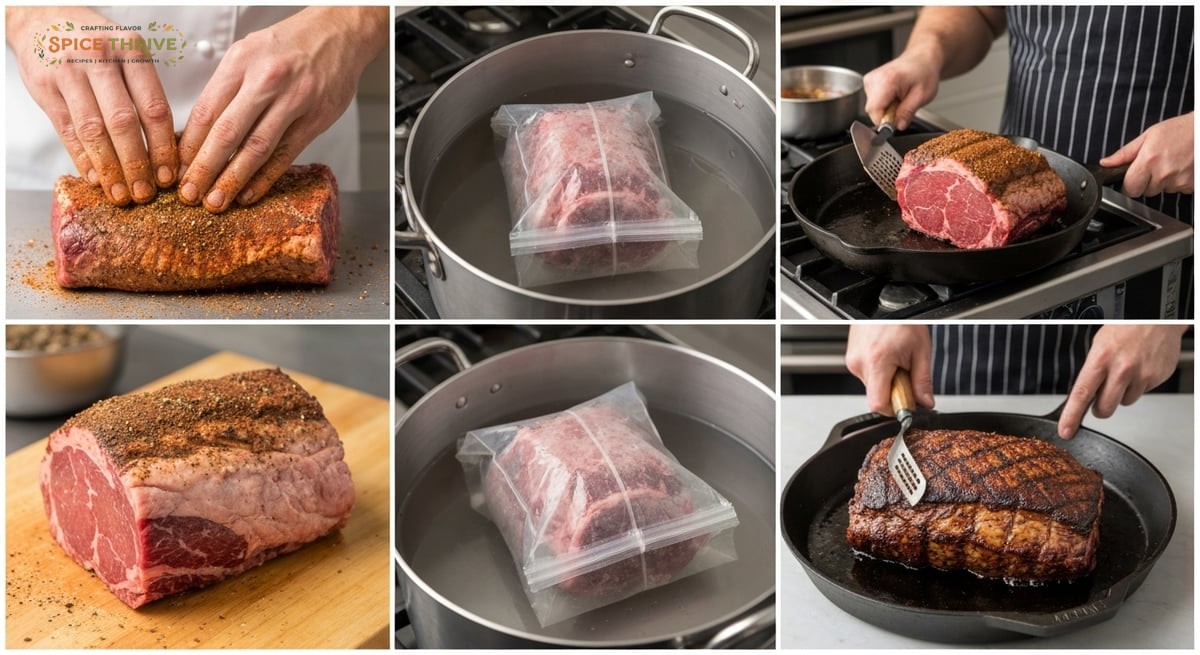
- Prep the roast: Pat roast dry. Mix salt, pepper, garlic, and herbs with 2 tbsp oil; rub all over roast, getting into crevices. (Photo: roast coated in thick, aromatic rub, ready for bagging.) For bigger cuts, spend an extra minute massaging seasoning under any surface fat or into the bone channels—this helps release flavor during cooking.
- Bag it up: Slide roast into a large heavy-duty freezer bag (or vacuum bag). Use the water displacement method (slowly lowering, then zipping shut) if you don’t have a vacuum sealer. (Photo: roast sealed tightly, no air pockets.) Try double-bagging if you’re concerned about leaks on larger roasts. If using herbs, press a sprig or two on the meaty side of the roast, against the bag, for an added aromatic punch that infuses during the bath.
- Set up bath: Preheat sous vide water bath to 133°F (56°C) for medium-rare (see chart below for other temps). Submerge roast, making sure it’s fully under water. Clip bag to edge if needed. (Photo: big pot bubbling gently, roast submerged.) Ensure good water circulation (don’t pack the pot with too many items) for even heating. If your kitchen is cool or your vessel large, insulate the pot with a lid or plastic wrap to prevent heat loss and evaporation during a long cook.
- Sous vide time: Cook for 6–10 hours, depending on size (8 lbs = 10 hours, 4 lbs = 6 hours; more details below). Longer is more tender, not overcooked. (Photo: relaxed kitchen, timer on the counter.) Aim for the higher end of timing if you want a fork-tender, sliceable texture. For traditional, “chewier” prime rib with structure, stick closer to 6 hours for smaller roasts. If this is your first time, check the roast at the minimum time for your weight and feel for doneness by pressing through the bag—it should feel supple but resilient.
- Chill for best sear (optional): For ultimate crust, chill bagged roast in ice water for 30 min, then pat dry. (Photo: roast in ice bath, condensation on bag.) This step is especially helpful if the roast has rendered a lot of juices in the bag; chilling firms up surface proteins, so you get a more even and deeply browned bark when searing.
- Crust it up: Heat large cast iron pan to very hot. Add oil and sear roast all over, 45-60 secs per side. Baste with butter if using, herbs sizzling. (Photo: thick crust forming, garlic and rosemary popping in butter.) For an even deeper crust, press down gently with tongs as you sear flat surfaces. Let herbs and smashed garlic ride in the hot fat, then lay them briefly on the sliced meat for flavor and presentation when serving.
- Rest and slice: Let rest 10 min, slice thick and serve with juices or Homemade Horseradish Cream (see related recipes). Each slice should be rosy pink, with a crispy bark. (Photo: perfectly pink slice, juices running.) Sharpen your knife for clean, dramatic slices and serve immediately for maximum juiciness. Save leftover juices from the bag—they can be reduced into a simple sauce to spoon over meat or mashed potatoes.
Temperature Guide:
Rare: 129°F (54°C)
Medium rare: 133°F (56°C)
Medium: 138°F (59°C)
Medium well: 144°F (62°C)
Tips From My Kitchen: What I Learned After Seven Tests
- Don’t be stingy with salt. My first test was under-seasoned once sliced. Don’t be shy—prime rib is thick and needs robust flavor. The outer crust is your chance to get serious flavor into each bite, so be generous and press the seasoning into the surface.
- Sear with confidence. Early tries were too timid—don’t worry about a little smoke. Cast iron and high heat make all the difference for a chewy, flavorful crust. Open windows if you must: a fast, hot sear creates the deep brown Maillard reaction that makes steakhouse meat special. After several tries, I found that using clarified butter or a splash of high smoke-point oil with the butter helps avoid burning and creates a richer crust.
- Let it rest—even after sous vide. I thought resting wouldn’t matter, but a short 10-15 minute pause lets juices redistribute for juicier slices. If you cut right away, juices flood out and leave the meat drier than you’d think possible after sous vide.
- Air pockets are the enemy. My second batch had a pocket in the bag, leading to uneven doneness. Smooth the bag tightly or use a vacuum sealer. For very thick roasts, carefully smooth the bag so the top and bottom touch the meat—fold or twist away loose plastic or use sous vide weights to help keep everything submerged.
- Low and slow isn’t scary. The sous vide bath means you can’t overcook it by accident. Extra time only makes it more tender, not drier.
- Practice your crust. I now finish directly on the stovetop instead of the broiler—the pan gives more control over the sear and avoids overcooking. Flipping the roast with tongs and continuously spooning hot fat over the surface builds a golden, even crust on all sides. Keep a close eye and enjoy the transformation—the crackle is half the fun!
Variations & Dietary Swaps: How to Make It Yours
- Herb-Crusted Sichuan Style: Swap half black pepper for ground Sichuan, use scallion and coriander with classic herbs for a tingly kick. Add a pinch of Chinese five spice to the garlic rub if you like subtle sweetness with your heat.
- Asian Soy-Ginger Note: Add 1 tbsp (15ml) soy sauce and 2 tsp grated ginger to oil rub (contains soy). Toasted sesame oil (1 tsp) brings a rich, nutty finish—just brush over before bagging for maximum flavor infusion.
- Bolder Crust: Add 1 tsp dried mustard or wasabi powder to your spice rub for deeper heat. Or create a coffee-pepper crust by mixing 1 tsp finely ground espresso into the salt blend.
- Cuts & Proteins: This method works for boneless rib roasts, or smaller cuts like strip loin (adjust timing: about 1 hour per pound). Recipe is not vegetarian but you can try this exact process on a large portobello mushroom cap or whole cauliflower for a dramatic, plant-forward centerpiece. (Adjust cook time to ~2 hours instead.) For lamb lovers, a frenched rack or boneless lamb leg responds beautifully to the same time and temperature techniques; season more assertively, since lamb likes bold aromatics.
- Allergen swaps: Dairy free? Use only oil, skip butter. Gluten free and nut free as written. For soy allergies, skip optional Asian style variation. For low-salt diets, start with half the salt and finish with a sprinkle of flaky sea salt at the end to taste.
Make Ahead, Storage & Reheating Tips
- Make Ahead: After sous viding, chill roast in ice water, then keep bagged in the fridge for up to 2 days. Sear just before serving for best crust. I’ve successfully prepped the night before a big gathering, then simply seared and sliced as guests arrived, saving both oven space and last-minute panic.
- Storage: Leftovers last up to 4 days in the fridge, tightly wrapped. Keep uncut as long as possible to prevent drying. Slices dry out faster; for best texture, only slice what you need per meal, and wrap leftovers in foil or airtight silicone bags to retain moisture.
- Reheating: Slice only what you need. Gently warm slices in a 250°F (120°C) oven wrapped in foil, or sous vide leftovers at 130°F (54°C) for 45 minutes in their bag. Avoid microwaving—prime rib dries quickly. For next-day sandwiches, shave slices thin and give a quick pan toss with a drizzle of reserved juices or a splash of beef broth to bring back moisture and flavor without overcooking.
- Freezer: Freeze whole cooked roast for up to 2 months, tightly wrapped. Thaw in fridge overnight, then reheat sous vide and finish with a fresh sear. If freezing post-slicing, separate layers with parchment for easy portioning. Vacuum-sealing helps minimize freezer burn for longer storage.
Printable Recipe Card: Sous Vide Prime Rib
Sous Vide Prime Rib Recipe
- Prep Time: 15 minutes
- Cook Time: 6 to 10 hours
- Total Time: 6 hours 30 min – 10 hours 30 min (inc. sear & rest)
- Yield: Serves 6–12, depending on roast size
Ingredients
- 1 bone-in prime rib roast (4–8 lbs / 1.8–3.6 kg)
- 2½ tbsp (37g) kosher salt
- 2 tbsp (15g) freshly ground black pepper
- 6 large cloves garlic, crushed (30g), or 1½ tbsp dried granulated
- 3-4 sprigs fresh rosemary, 3-4 sprigs fresh thyme (or 2 tsp dried each, 2g each)
- 3 tbsp (45ml) olive or neutral oil, divided
- 2 tbsp (28g) butter (optional)
Instructions
- Mix salt, pepper, garlic, herbs, and 2 tbsp oil into a rub. Massage into the roast on all sides. For extra depth, season the night before, wrap loosely, and let rest in the fridge for a dry-brine effect.
- Place roast in heavy-duty freezer bag or vacuum bag. Remove air by displacement or vacuum/ripple seal. Try laying a few sprigs of herbs or crushed garlic between meat and bag before sealing to maximize flavor.
- Set sous vide to 133°F (56°C) for medium rare. Submerge roast, clip bag. If your sous vide machine allows, cover the pot with foil or a lid to conserve heat for lengthy cooks.
- Sous vide for 6–10 hours (longer for larger or extra tender; shorter for smaller). At higher altitudes, add 30-60 minutes to reach full doneness.
- Optional for best crust: When time is up, chill bagged roast in ice water for 30 minutes. This helps get a neater, restaurant-style crust during searing by reducing carryover surface heat.
- Remove, pat dry, heat cast iron skillet with 1 tbsp oil until smoking. Sear roast, all sides, 1–2 minutes total, adding butter and spooning over during sear. Use tongs to brown edges, and add extra aromatics (rosemary, thyme) to the pan if desired.
- Rest 10–15 minutes. Slice thick, serve with juices or desired sauce.
Nutrition (per 8 oz serving, estimate)
Calories: 690 | Protein: 46g | Fat: 55g | Carbs: 1g | Gluten free, nut free, dairy free option (skip butter)
Author & Update Notes
Recipe & Photos by: Steph Lau, Home cook and founder of Spice Thrive, recipe tested 7+ times for foolproof results. This post updated June 2024 (see About page for more on my kitchen and testing style). All process photos taken in my home kitchen, shown as described above.
Ready to Make the Best Prime Rib?
I hope this sous vide prime rib recipe brings the same celebration (and juicy, tender slices) to your table that it has to mine. I love seeing your prime rib success—share your results or questions in the comments, and check out other comforting classics like Red Braised Beef or Soft and Fluffy Milk Bread if you’re hungry for more inspiration. Happy cooking! — Steph
Common Questions About Sous Vide Prime Rib
Can I sous vide a frozen prime rib?
Yes! Add 1-2 extra hours to cook time. Season and bag from frozen, then proceed as normal.
Does the meat get mushy if I sous vide too long?
Past 10-12 hours it can start to soften a bit too much. Stick to 6-10 hours for classic prime rib texture.
Do I need a vacuum sealer?
No, but it helps. The water displacement method works great—just slowly lower your bag into water to push air out.
What’s the best way to get a deep crust?
Chill cooked roast in an ice bath, dry it well, and use screaming hot cast iron with a bit of oil and butter for 1-2 minutes per side.
How should I serve prime rib?
With juices, horseradish cream, or a simple pan sauce. Yorkshire pudding is classic.
How can I tell if it’s done if the water bath is set?
Sous vide brings everything to your target temperature, so it’s always done—just check that texture is as you like it.
This article was created with the help of AI. Images may also be AI-generated.