Warm Memories and the Heart of Chicken Liver Pâté
My introduction to chicken liver pâté happened around a holiday table, nervously spreading a little mound of creamy, savory paste across a slice of soft baguette. It felt like a rite of passage in my family, especially since my grandmother made hers from scratch with only the tiniest, proudest tweaks to her own mother’s recipe. Over the years, I’ve tweaked it further—less salt, a splash of brandy, browned butter for extra depth. I’ve cooked this at least 10 times in my own kitchen now, chasing the magic of that first bite. There’s something wonderfully tactile about folding butter into warm livers, blending until impossibly smooth, then chilling it to let all those flavors get to know each other. Whether you’re new to chicken liver pâté or reliving old rituals, this version is all about rich flavor, easy technique, and lots of practical tips (plus real, in-process photos) to help you get it just right.
Why You’ll Love This Chicken Liver Pâté Recipe
- Extra Creamy, Never Grainy: Multiple rounds of testing (and a few overcooked batches) taught me the secret to silky-smooth pâté: gentle, quick cooking and plenty of butter. The texture is perfectly spreadable, and you’ll notice how easily it glides onto toast or crackers, creating a restaurant-worthy first impression even for home cooks. Careful blending also ensures there’s no gritty afterbite—every sample I served at dinner parties was quickly met with astonished praise at how refined it tasted, even among guests who were new to liver.
- Restaurant-Quality Results at Home: Even if you’ve never made pâté, the clear cues and process photos below help you nail it—no fancy gadgets or culinary school experience needed. Friends have been amazed when I’ve brought this to potlucks, raving that “it tastes like something from a French bistro,” especially when garnished with sprigs of herbs or a drizzle of browned butter for color. The method is streamlined for busy cooks: everything happens in one pan, with minimal mess, and the finished spread can be portioned into small ramekins for beautiful single servings or rustic, family-style presentation.
- Budget-Friendly & Impressive: Chicken livers are inexpensive but, handled well, rival the best bistro appetizers. This wow-factor dish feeds a crowd for a fraction of what you’d pay at a deli. For about the price of a single restaurant appetizer, you can make enough pâté to supply a party buffet or several family snacks—the kind of dish that earns oohs and ahhs without breaking your budget. This makes it ideal for entertaining, but it’s also a favorite for small, special weeknight treats—just toast up a few slices of stale bread and you’ve got something luxurious in minutes.
- Customizable Flavor Profile: Whether you prefer a classic French-style (shallots, thyme, brandy) or want to lean into Asian aromatics (a splash of soy, a pinch of five spice), there’s room for your own twist. I’ve experimented with everything from smoked paprika and roasted garlic (for a slight Spanish inspiration) to adding a spoonful of miso or using bourbon instead of brandy. Every variation feels new but familiar. You control the richness, brightness, and even the presentation—top with fresh herbs, pickled shallots, or a few dots of pepper jelly for contrast.
- Perfect for Make-Ahead: The flavors deepen over time, and it keeps beautifully. Ideal for holidays, cozy gatherings, or just spreading on toast alongside a crunchy salad. I regularly make pâté a day or two in advance for dinner parties, then simply pull it straight from the fridge before guests arrive. The rest time in the fridge melds the flavors, making it even more delicious by the time you serve. Plus, it frees you up for other last-minute party prep, while guests marvel over your “effortless” spread.
Ingredient Notes & Smart Swaps
Here’s what you’ll need—and how each ingredient shapes your pâté.
- Chicken Livers: 1 pound (450g), cleaned and trimmed. Fresh livers give a more delicate flavor, but frozen (thawed and patted dry) work perfectly well—just avoid any with a strong ammonia smell. If you’re buying from a butcher, ask for livers that look plump and have a moist, shiny surface—these are fresher. Removing all visible fat, sinew, and any greenish spots (bile remnants) is critical; leftover bits will lend bitterness. Don’t be afraid to use kitchen shears or a sharp paring knife for a thorough job. Many European families recommend soaking livers briefly in milk to tame any assertive flavors, though this is optional and not strictly necessary for well-handled, high-quality livers.
- Butter: 12 tablespoons (170g), unsalted, divided. Adds creaminess and helps achieve a luxurious mouthfeel. Substitute vegan butter for dairy-free. For added depth, try browning half the butter before adding—nutty undertones make the final spread even richer. European-style butters, with higher fat content, are particularly decadent here, but use what you have. Salted butter works as a substitute, just reduce added salt in the recipe slightly and taste as you go.
- Shallots or Yellow Onion: 1 medium (about 1/2 cup, 60g) adds gentle sweetness and depth. Sweet onion or even a few cloves of garlic also work. Shallots are classic, imparting subtle flavor without overpowering the delicate liver. If using yellow or sweet onion, dice finely so it melds smoothly. For a more assertive note, a single small clove of garlic minced in with the shallots adds earthiness; caramelizing the onions first lends subtle sweetness and complexity, echoing flavors found in many traditional French recipes.
- Fresh Thyme or Parsley: 1 tablespoon, chopped. Thyme is classic, parsley brings freshness. Use dried thyme if needed (1 teaspoon). Other herbs lend personality: tarragon gives anise notes; a bit of marjoram or sage adds woodsy character. Blend in chives, basil, or even a bit of rosemary (removed before blending) for a fragrant spin—herbs are your invitation to make the pâté your own.
- Brandy or Cognac: 2 tablespoons (30ml). Optional but brings warmth and complexity. You can also use whisky, sherry, Marsala, or—if avoiding alcohol—a splash of Worcestershire or apple juice. Brandy is classic and gives a subtle, almost caramelized background note that truly elevates the spread. For a Mediterranean version, use sweet Marsala wine or a dash of port, both of which add depth and a slight hint of sweetness that plays beautifully off the richness of the liver.
- Cream: 1/4 cup (60ml) heavy cream rounds out the richness. Omit or replace with a splash of unsweetened oat milk for dairy free. For even greater richness, some cooks use crème fraîche, sour cream, or mascarpone instead—each brings a subtly different tang and texture, so feel free to experiment based on what you have on hand. Light coconut milk can also produce a faintly tropical, dairy-free result that still holds up in texture.
- Kosher Salt and Black Pepper: Start with 1 teaspoon salt, 1/4 teaspoon pepper, then taste and adjust. Don’t hesitate to finish with flaky sea salt at the table for extra texture. If you enjoy a slight kick, grind in a bit of white pepper, which is more aromatic and less spicy than black.
Allergen Notes: Contains dairy (butter, cream). Gluten-free if served with gluten-free bread or crackers. Nut-free, egg-free, soy-free as written. The base recipe is suitable for most dietary needs, and you can adapt it for allergies or taste preferences as described above, making it as inclusive as possible for gatherings or potlucks.
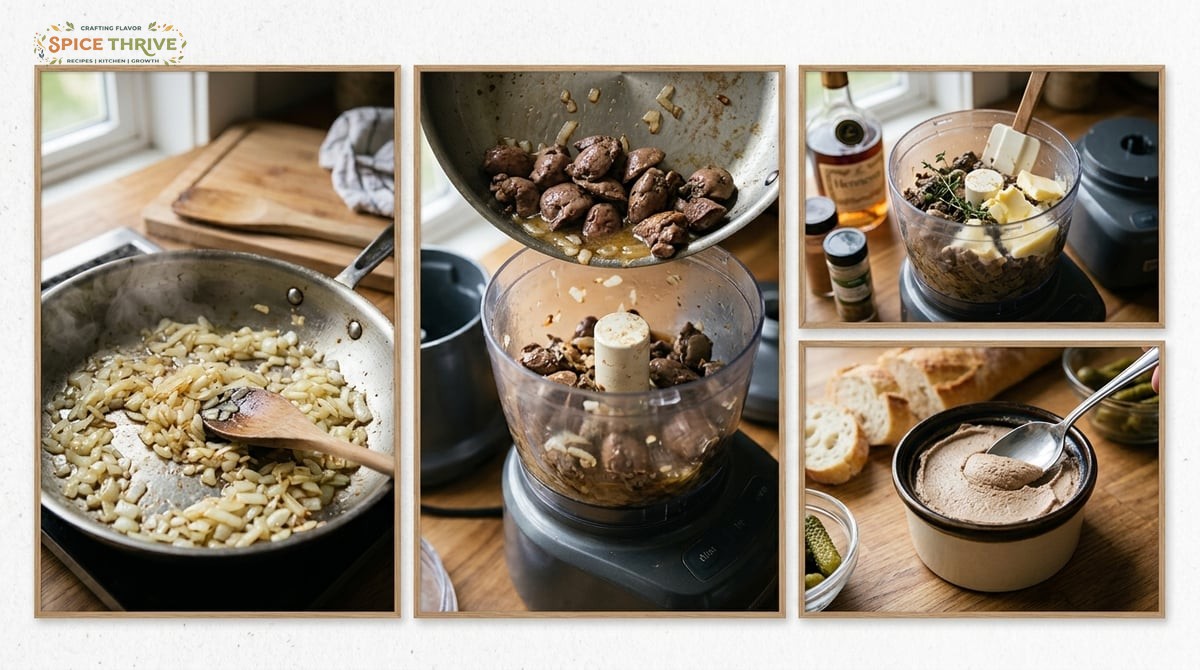
Step-by-Step: How to Make Chicken Liver Pâté (With Real Kitchen Photos)
- Prep the livers: Use kitchen shears to trim away visible fat, sinew, or greenish spots (they’ll taste bitter). Pat the livers dry with paper towels for best browning. This step is not just cosmetic: well-trimmed, dry livers brown beautifully, resulting in a sweeter, non-metallic flavor. Spread livers out on a paper towel-lined tray, and let air-dry for 10-15 minutes if you have time—it’s a chef’s secret for perfect sautéing.
- Sauté aromatics: In a large skillet over medium heat, melt 2 tablespoons (28g) butter. Add chopped shallot and cook until translucent and fragrant, but not browned, about 2-3 minutes. Stir frequently, scraping up any bits so nothing scorches. For extra depth, add a pinch of salt and cook the shallots a minute longer until they start to soften, which draws out their natural sweetness.
- Cook the livers: Add cleaned livers, salt, pepper, and herbs. Sauté, stirring gently, until just cooked through—no pink left inside but still juicy—about 4 minutes per side. Don’t overcook, or it will turn grainy. For accuracy, check the thickest lobe with a paring knife; juices should run clear, and the interior should be just barely opaque. The smell will be rich and slightly sweet, never sharp or acrid. If your pan is small, cook the livers in two batches for even browning.
- Add brandy: Deglaze with brandy. Let it bubble up and reduce for a minute, then remove pan from heat. The alcohol cooks off quickly, leaving behind concentrated sweet, warm notes—swirl the pan to coat the livers well and scrape up any fond (browned bits) for maximum flavor. If you prefer alcohol-free, use apple juice or rich chicken stock at this stage.
- Blend: Tip everything into a food processor. Add remaining butter in chunks and cream. Blitz until silky and smooth (scrape down sides as needed). Blending while the livers are still warm ensures butter emulsifies fully, yielding a cohesive, luscious spread. Be patient—blend for one full minute, pause, scrape down the edges, and blend again for another minute. If you want ultrafine, restaurant-style texture, pass through a fine mesh sieve at this point, using a spatula to push the mixture through.
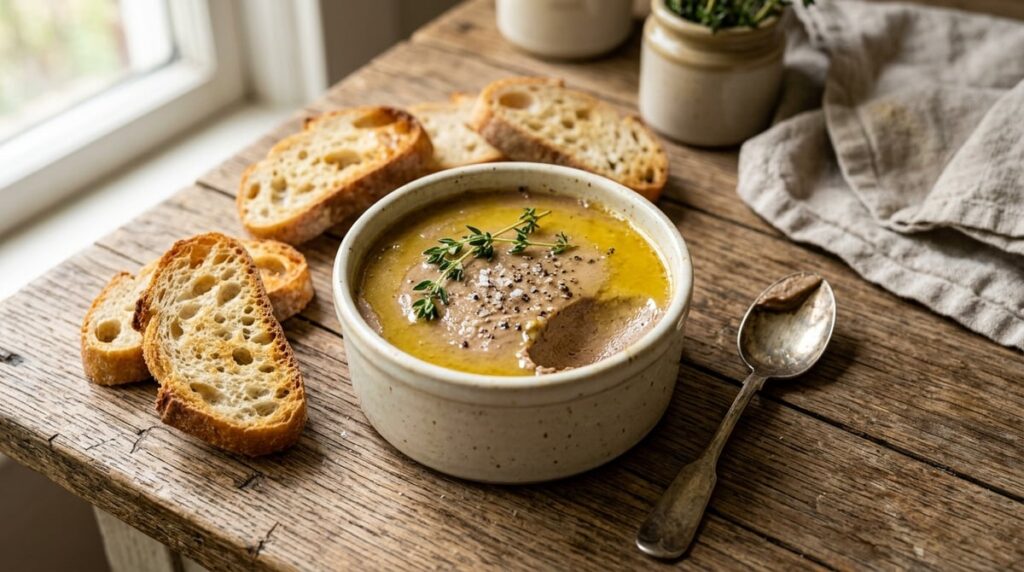
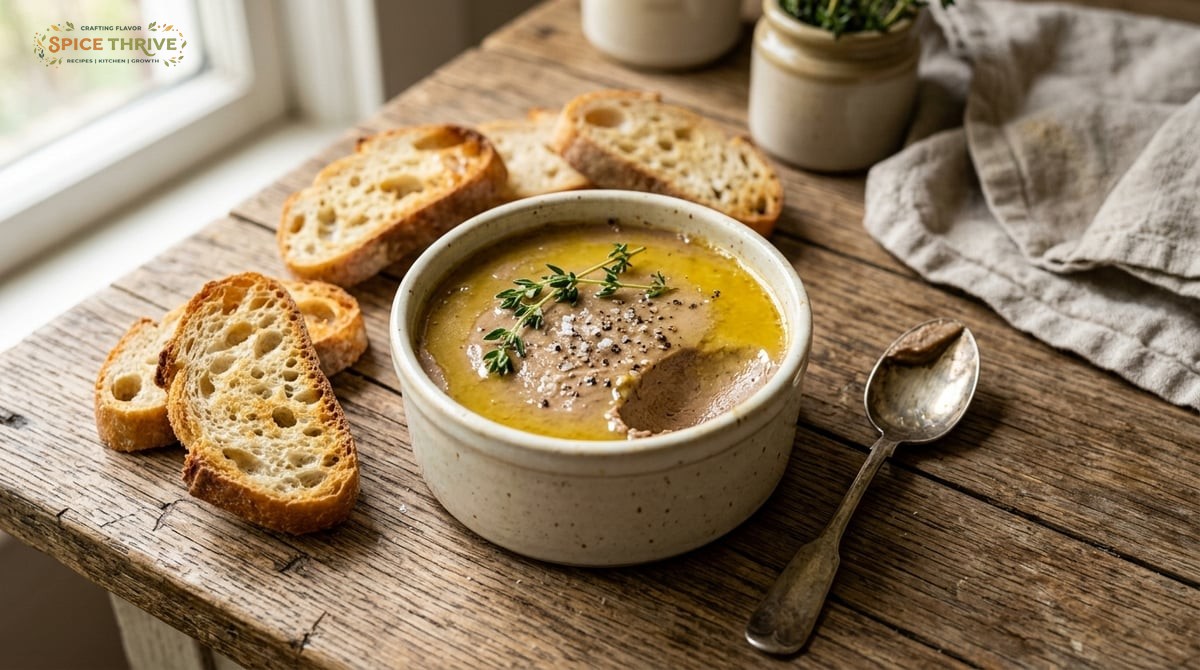
- Chill and finish: Taste and adjust salt. Scrape into a ramekin or jar, smooth the top, and chill for at least 2 hours. For a restaurant-style look, pour a thin layer of melted butter or clarified butter over the top to seal. Chill overnight for best results. A butter seal locks in freshness and gives childhood nostalgia for classic French charcuterie boards—serve right from the fridge, garnished with thyme, parsley, or a sprinkle of flaky salt. Top with pickled shallots or a few cornichons for tangy contrast just before serving.
Pro Tips and Troubleshooting (From Real Test Batches)
- Don’t Overcook: This is the #1 mistake! Overcooked livers taste chalky and the pâté becomes dry and crumbly. Cook just until the juices run clear; a thermometer should read about 165°F (74°C). If you’re uncertain, err on the side of barely-done—residual heat will finish the cooking. In testing, I sliced into the thickest part to check (no translucent center); a light blush is safe and delicious.
- Sift for Super Smooth: If texture matters, force the blended pâté through a fine mesh sieve for that classic silky finish. I tested both ways—sieved is worth it if you want ultimate smoothness, but it’s still delicious straight from the processor. The process only adds a few minutes, but the transformation in mouthfeel is noticeable—particularly if serving to guests or using as a starter. A flexible spatula or the back of a soup ladle helps push everything through without waste.
- Balance the Flavors: Early test batches tasted flat until I increased salt and acid. Taste before chilling: a tiny splash of apple cider vinegar or lemon brightens everything. If the pâté tastes “heavy,” a pinch of sugar or a scrape of grated apple can lighten the spread. I sometimes swirl in a teaspoon of Dijon mustard before blending for a subtle, zippy note that cuts through the richness beautifully. Always taste when warm—the flavors will mute slightly when cold.
- Avoid Excess Liquid: Make sure your livers are dry before sautéing. Too much moisture = less flavor and a looser spread. If you see a lot of liquid in your pan while cooking, pour some off or turn up the heat briefly to evaporate, then return heat to medium to finish. The result is a pâté that sets up beautifully and slices clean for presentation, rather than turning soupy or weeping at the edges after chilling.
- Let It Rest: Pâté tastes best after chilling overnight, when flavors mellow and deepen. Don’t skip the rest time. Even a few extra hours in the fridge transforms the flavor, making every bit of herb, brandy, and butter meld into a sum greater than its parts. Some families even make it 2-3 days ahead before serving—just cover tightly to prevent fridge odors from creeping in.
Easy Variations and Dietary Swaps
Chicken liver pâté is wonderfully adaptable. Here are tested options to suit different tastes and diets:
- Asian-Inspired: Skip brandy, add 1 tablespoon soy sauce, a dash of toasted sesame oil, and a pinch of Chinese five-spice. Serve with cucumber rounds or rice crackers. I’ve even tried blending in a tiny spoonful of grated fresh ginger for extra brightness—delicious with a side of quick-pickled carrots, reminiscent of Vietnamese flavors.
- Dairy Free: Substitute vegan butter and unsweetened oat milk for the butter and cream. Texture changes slightly, but it’s still silky and rich. Coconut oil can be used in place of vegan butter for a firmer set with subtle tropical notes, and full-fat coconut milk offers a luscious, creamy alternative.
- Herb-Lovers: Fold in finely chopped chives, tarragon, or dill after blending for a bright herby finish. A swirl of fresh basil or cilantro creates Mediterranean or modern twists. Try adding chopped arugula or watercress for a subtle peppery bite that pairs well with sweet brioche or rustic rye toast.
- Vegetarian/Vegan: Classic pâté relies on liver, but for a plant-based version, try this Mushroom Walnut Pâté with similar creamy-spreadable vibes. Roasted beets, caramelized onions, or lentils also work as hearty stand-ins, offering depth and a lush mouthfeel without animal products. Smoked paprika, liquid aminos, or a dash of truffle oil boost umami content in vegan spreads.
- Alcohol-Free: Swap brandy for apple juice, chicken stock, or even a splash of strong brewed tea. Mushroom stock works particularly well for added richness and a deeper flavor profile if you want to avoid both alcohol and added sweetness—taste as you go to adjust acidity and balance.
Best Ways to Store, Reheat, or Make Ahead
- Storage: Store tightly covered pâté in the fridge for up to 1 week. Cover the surface with a thin layer of melted butter to help prevent oxidation and keep it fresh. To further prevent off-flavors or odors, press plastic wrap directly onto the surface before sealing the container lid. If you make multiple batches, label with the prep date and enjoy over several days for quick, elegant snacks.
- Freezer Friendly: Pâté freezes surprisingly well. Spoon into an airtight container, leaving 1/2 inch for expansion, and freeze for up to 2 months. Thaw overnight in the fridge before serving. To maintain texture, freeze in individual ramekins or silicone molds for convenient single servings—handy for last-minute hors d’oeuvre or to pack a special lunch.
- Reheating: Pâté is best served chilled or at room temperature. If you prefer it a little warmer, set out at room temp for 30 minutes before serving. Do not microwave, as it can separate. For an extra creamy serve from the fridge, let the pâté soften while you prep bread or salad; if needed, whisk gently to restore smoothness before plating.
- Make Ahead: Pâté is ideal for prepping 1-2 days ahead. Flavors improve, and it’s one less thing to fret about before guests arrive! When hosting, serve in smaller jars so you can replenish the table throughout the evening—this keeps remaining pâté fresher for longer and always looking elegant.
Printable Chicken Liver Pâté Recipe Card
Classic Creamy Chicken Liver Pâté
- Prep Time: 20 minutes
- Cook Time: 15 minutes
- Total Time: 2 hours 35 minutes (including chill)
- Yield: Serves 8 as an appetizer
Ingredients
- 1 lb (450g) chicken livers, trimmed
- 12 tbsp (170g) unsalted butter, divided
- 1 medium shallot or onion, finely chopped (1/2 cup, 60g)
- 1 tbsp (15g) fresh thyme or parsley, chopped
- 2 tbsp (30ml) brandy or cognac, optional
- 1/4 cup (60ml) heavy cream (or unsweetened oat milk)
- 1 tsp kosher salt (plus to taste)
- 1/4 tsp ground black pepper
Instructions
- Trim and clean the livers, removing any green spots and sinew. Pat dry. If desired, soak in milk for 15-30 minutes to tame flavor, then drain and dry again.
- Melt 2 tbsp (28g) butter in a skillet over medium heat. Sauté shallot until soft, 2-3 min, stirring often and adding a splash of water if needed to prevent browning.
- Add livers, herbs, salt, pepper. Sauté until cooked through and barely pink inside, 4 min per side. Avoid crowding the pan; work in batches if needed for best results.
- Add brandy, cook off alcohol, then remove from heat. Use a wooden spoon to scrape up any browned bits for extra flavor.
- Transfer everything to a food processor. Add remaining butter and cream. Blend until smooth, pausing midway to scrape down the bowl. For ultrafine texture, sieve the mixture into ramekins.
- Taste, adjust seasoning. Sieve if extra smooth is desired. Pack into dish, chill 2 hours. Let rest overnight for best flavor and smoother slices.
- Optional: Pour melted butter on top for a restaurant-style seal. Garnish with chopped herbs or cracked pepper before serving. Bring to room temperature for 20 minutes for easiest spreading.
Nutrition (estimate per serving):
Calories: 260, Fat: 22g, Carbs: 2g, Protein: 12g
Contains dairy. Does not contain gluten, nuts, eggs, or soy as written.
Thanks for Cooking with Me!
If you try this chicken liver pâté recipe, I’d love to see your creation—share a photo or comment and let me know how it went! For more restaurant-style starters and cozy classics, check out my spicy hummus or easy asiatic pickles—they’re perfect for entertaining. You can also read more about my kitchen experiences and food philosophy here.
Happy cooking! — Jamie, home cook & recipe developer
Common Questions about Chicken Liver Pâté
Is chicken liver pâté safe to eat?
Yes, as long as the livers are cooked to an internal temp of 165°F (74°C) and handled with clean utensils.
Can I double or halve the recipe?
Absolutely. Halve for a smaller batch or double for a party, keeping the same ratios and technique.
What if the pâté tastes bitter?
Bitterness can come from overcooked livers or untrimmed greenish spots. Trim well and don’t overcook for best flavor.
How do I get the smoothest texture?
Blend thoroughly, then push the mixture through a fine mesh sieve for a velvety result.
What should I serve with pâté?
It’s lovely spread on baguette, crispbread, or crostini, with cornichons, pickled onions, or a crisp salad for balance.
Can I use duck or turkey liver instead?
You can! The flavor will shift a bit (duck is richer), but the same recipe and tips apply.
This article was created with the help of AI. Images may also be AI-generated.